This article introduces Bagua as a philosophical framework, not a how-to guide or a placement manual.
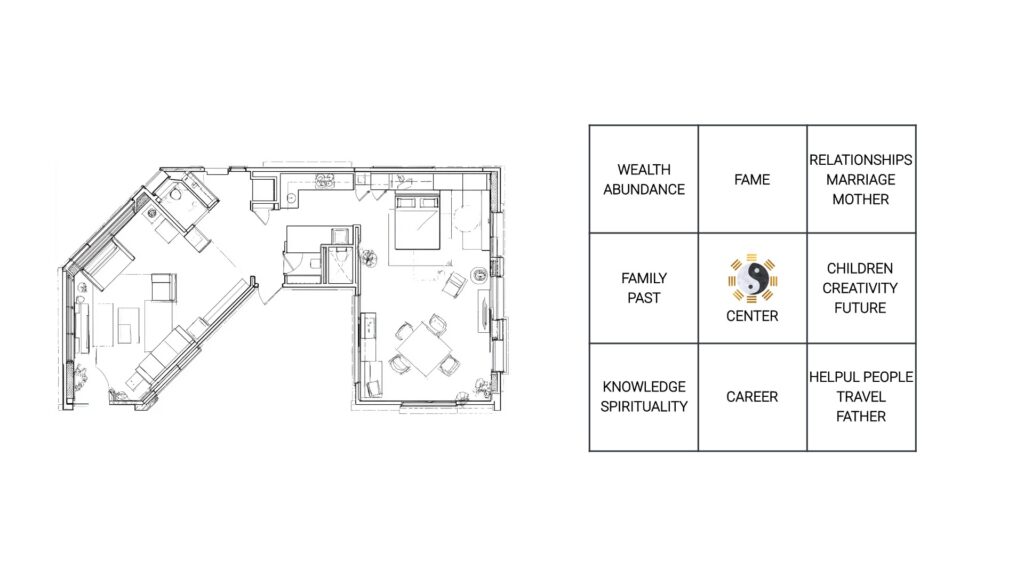
In the West, the word Bagua often conjures a specific image: a nine-square grid, a kind of energetic map to be laid over a floor plan. Each square corresponds to an area of life—wealth, relationships, career—and by placing the right objects in the right boxes, we are told we can enhance our fortunes. This interpretation presents Bagua as a life-hack tool, a simple checklist for manifesting success.
While this approach has introduced many to a new way of thinking about their homes, it simplifies a profound philosophical system into a formula. It treats space as a static diagram and life as a set of categories to be filled. The truth is, Bagua was never meant to be a rigid grid pasted onto a blueprint. It existed for centuries as a dynamic model of change, an elegant language for describing the universe, long before it was ever applied to the layout of a house. Its real power lies not in its application as a checklist, but in its capacity as a framework for understanding the subtle, flowing patterns that shape our world.
To grasp what Bagua truly is, we must first appreciate its purpose as an abstract system.
Bagua as an Abstract System

The world we experience is infinitely complex, a seamless flow of events, relationships, and transformations. To make sense of it all, humans create models—abstractions that compress this complexity into understandable patterns. We see this in science, in art, and in philosophy. Bagua is one such system. It is a conceptual framework that distills the continuous, flowing nature of change into a set of eight fundamental states.
Crucially, Bagua does not describe things. It does not label an object, a color, or a corner of a room. Instead, it describes relationships, processes, and the quality of movement. It offers a language to read the energetic behavior of a system, whether that system is a season, a human interaction, or the atmosphere of a home. It is less a map of what is and more a description of how things become. This elegant abstraction allows it to be a tool for observation, a way of seeing the underlying rhythms that are present everywhere. The system’s genius is not in providing answers, but in teaching us how to ask better questions about the spaces we inhabit and the lives we lead.
From Taiji to Yin and Yang: The Simplest Form of Change
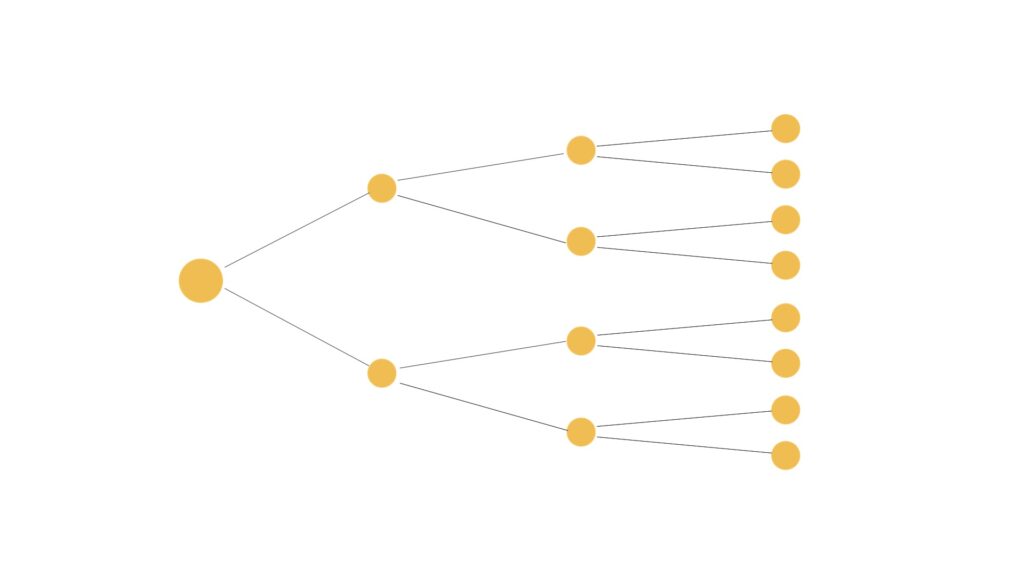
The journey into the heart of Bagua begins with a concept of profound simplicity: Taiji, often translated as the “Supreme Ultimate.” Taiji is not a physical object or a distant place, but the representation of an undivided whole—a state of pure potential before any distinction arises. It is the silent, motionless source from which all phenomena emerge. Imagine a perfectly still, deep body of water, holding within it the potential for every wave, ripple, and current.
From this state of unity, the first movement occurs. The whole divides itself into two primary, opposing, yet complementary tendencies: Yin and Yang. These are not moral categories of good and evil, nor are they fixed identities. They are descriptors of a dynamic relationship.
Yin represents stillness, contraction, darkness, and receptivity. It is the downward, inward pull—the quiet gathering of energy. Yang represents movement, expansion, light, and activity. It is the upward, outward push—the expressive release of energy. One cannot exist without the other, just as a wave cannot have a crest without a trough. Their interplay is the fundamental engine of all change. In a way, it is the universe’s most basic binary logic—not just on and off, but gathering and expressing, resting and acting. This first, simple division gives the world its pulse.
From Yin-Yang to the Four Phases: Change Has Stages
Change does not unfold randomly. The dance between Yin and Yang follows a natural, rhythmic progression. It has stages. When we observe the world, we see that processes have a beginning, a middle, and an end. This cyclical rhythm is captured in what are known as the Four Phases or Four Images. These emerge from the simple interplay of Yin and Yang, adding a layer of complexity to the model.
We can think of these phases as distinct stages in any process of transformation:
- Deep Stillness (Major Yin): This is a state of maximum receptivity and rest, where energy is consolidated and held in potential. It is the quiet of deep winter, the silence before an idea forms.
- Emergence (Minor Yang): From stillness, the first impulse of movement appears. This is a gentle, tentative expansion. It is the first sprout of spring, the birth of a new thought.
- Peak Intensity (Major Yang): This phase represents maximum activity and expression. Energy is fully externalized, powerful, and radiant. It is the bright, expansive energy of mid-summer, the peak of creative output.
- Return and Consolidation (Minor Yin): Following the peak, energy begins to withdraw and gather inward. This is a phase of harvest and reflection, a return to quiet. It is the crispness of autumn, the process of refining and completing a project.
While the seasons provide a beautiful and intuitive example, the core idea is universal. The Four Phases describe the rhythm of a breath, the arc of a conversation, or the life cycle of a business. It is a recognition that all movement has a pulse, a natural sequence of waxing and waning.
From Four Phases to Bagua: Change Gains Qualities
When this abstract rhythm of change enters the physical world, it takes on distinct characteristics. It is no longer just a pulse; it has a quality, a texture, a way of behaving. This is where the eight trigrams of the Bagua emerge. By adding a third line—another layer of Yin or Yang—to each of the Four Phases, eight fundamental patterns of energy are formed.
These eight trigrams are not merely symbols; they are archetypes of energetic behavior. Each represents a unique way that energy manifests in the world. They are not directions on a compass, numbers, or personality types. They are verbs, not nouns. They describe how energy moves, gathers, penetrates, yields, and shines. One trigram might describe a powerful, focused ascent, while another describes a gentle, yielding dispersal. Together, they form a complete vocabulary for the ways change can express itself.
Natural Forms and Trigrams
To make these abstract patterns understandable to the human mind, the ancient sages linked them to powerful, observable patterns in nature: Heaven, Earth, Thunder, Wind, Water, Fire, Mountain, and Lake.
This is a critical point. These natural forms are not metaphors or poetic decorations. They were chosen because they are stable, recognizable manifestations of the abstract energy patterns described by the trigrams. Heaven, for example, is the embodiment of pure, creative, expansive Yang energy. Earth is the perfect representation of receptive, nurturing, and stable Yin energy. Thunder is a sudden, explosive release of energy from below, while Wind is a gentle, penetrating influence that permeates everything.
By observing these natural phenomena, early philosophers could ground the abstract principles of Bagua in tangible reality. The forms of nature became a living library of energetic states, helping people develop an intuitive feel for how these patterns operate in all aspects of life.
What “Correspondence” Really Means
This leads to one of the most misunderstood aspects of Bagua: the idea of correspondence. In simplified Western applications, correspondence is often treated as a one-to-one symbolic equation: a fountain is Water, a red candle is Fire. This turns the system into a game of symbolic matching.
But true correspondence is far more sophisticated. It is the recognition that the same abstract energetic state appears repeatedly in different forms across different domains. The trigram for Fire, for instance, describes a state of radiance, clarity, and adhesion. This pattern can be observed in the sun, in human consciousness and insight, in the function of the eyes, and in a home’s most brightly lit and active social area. None of these things is Fire; rather, they all share the same underlying energetic signature.
Correspondence is about recognizing a pattern, not labeling an object. It is this principle that gives Bagua its incredible versatility. It allows the same framework to be used to analyze natural cycles, human health, family dynamics, and, eventually, the layout of a building. The system provides a language for reading how these universal patterns of energy are supported or inhibited within any given context.
Why Bagua Can Be Used to Read Homes
A home is more than a collection of walls and furniture. It is a container for life, a space where patterns of behavior—rest, activity, gathering, solitude—repeat day after day. The architecture itself—the placement of windows, the flow between rooms, the height of the ceilings—stabilizes certain energetic behaviors and discourages others. A long, narrow hallway encourages quick movement. A sunken living room invites gathering and settling. A bright, open kitchen supports active, creative energy.
Bagua provides a language for reading these stabilized patterns. It does not judge a house as “good” or “bad.” Instead, it helps us understand the quality of the environment. It allows us to ask:
- Where does this home support stillness and rest?
- Where does it encourage dynamic movement and social interaction?
- How does light and energy flow from one area to another?
- Which parts of the home feel exposed and expansive, and which feel contained and protected?
By using the eight trigrams as a reading lens, we can begin to see our homes not as a collection of objects in rooms, but as a dynamic system of interacting energy fields. We can understand why one part of the house feels perfect for quiet reading, while another seems to buzz with an energy that makes it hard to relax.
A Language, Not an Answer
Ultimately, Bagua is not a prescription for a perfect life or a perfect home. It offers no quick fixes or guaranteed outcomes. It is a language—a subtle and powerful tool for observation and understanding. It teaches us to see the world not in terms of isolated things, but in terms of flowing relationships and recurring patterns.
When we bring this ancient framework to a modern American home, we do not simply copy ancient rules or place symbolic objects. Instead, we adapt the wisdom of Bagua as a reading tool. We use it to cultivate a deeper awareness of our environment and its influence on our lives. By understanding the language of change, we empower ourselves to create spaces that are more harmonious, supportive, and truly aligned with the way we want to live. This is just the beginning of a conversation about how this timeless framework can be applied with intelligence and sensitivity to our contemporary world.