
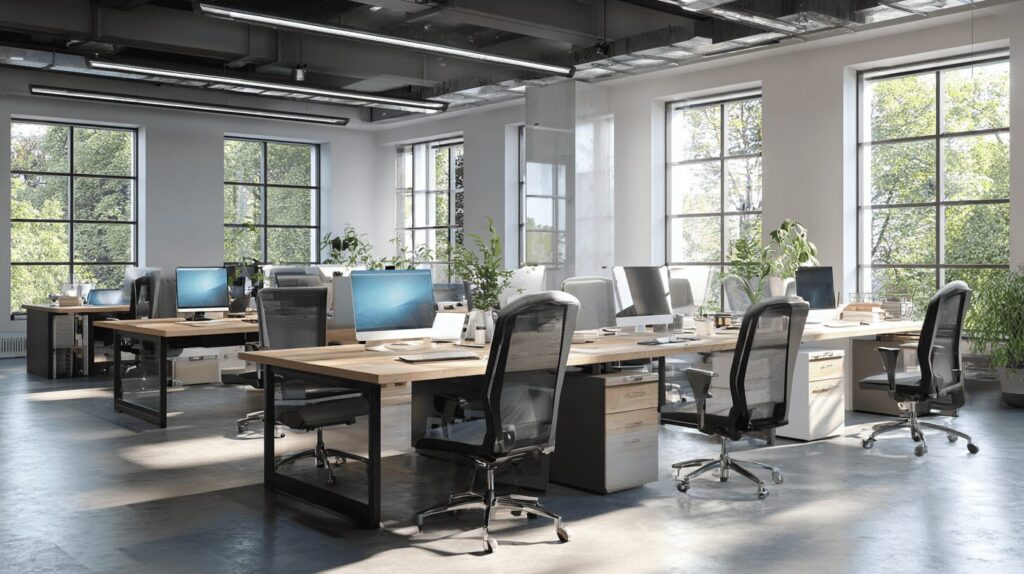
In the modern workplace, your desk is more than just a surface for your computer. It is your daily anchor—the physical space where your focus, influence, and energy converge. The subtle dynamics of an office, from the flow of foot traffic down a corridor to the sightline of a manager, create an invisible current that shapes your experience. How you are positioned within this current matters deeply.
This isn’t about superstition; it is about the quiet language of space. Your body intuitively responds to its environment, and your workstation’s placement sends constant signals to your nervous system. By understanding these signals, you can learn to arrange your personal workspace with intention, creating a foundation of support that enhances your clarity, presence, and professional flow, even in a busy open-plan office.
How Space Shapes Your Workday
Our senses are always interpreting our surroundings to gauge safety, opportunity, and social dynamics. The layout of your office floor—the placement of walkways, glass partitions, and team pods—influences your focus, stress levels, and even your visibility within the organization. This intersection of environmental psychology and ancient wisdom offers a powerful tool for cultivating personal harmony.
The Psychology of Sightlines
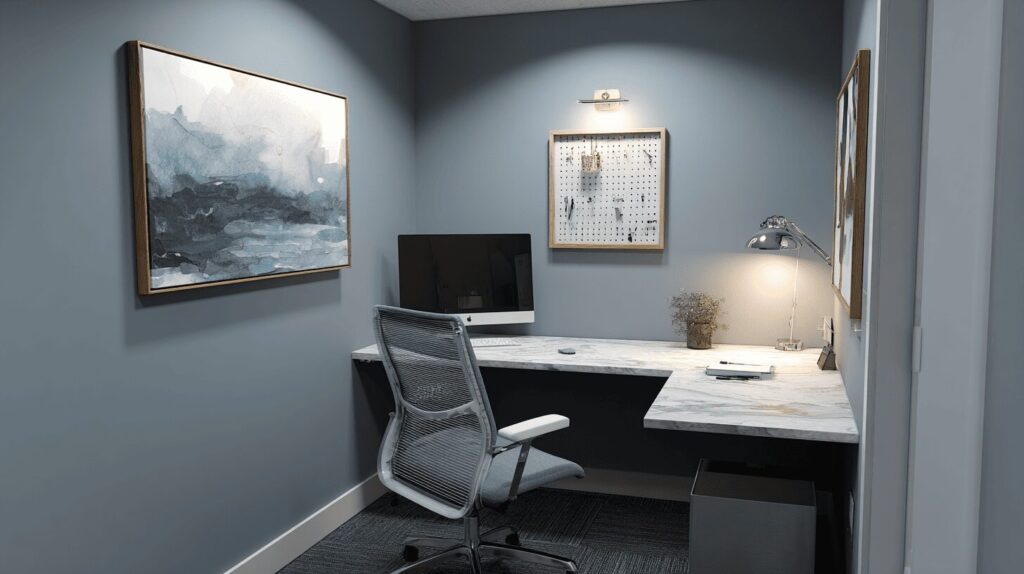
Consider the feeling of working at a desk facing a solid wall or the high partition of a cubicle. This narrow visual field can subconsciously lead to more contained, restricted thinking. It’s a position that fosters deep focus but may limit your sense of connection to the broader team energy.
Now, imagine your back is exposed to a busy walkway or the main entrance to your department. A part of your attention is perpetually diverted to monitor the movement behind you. This constant, low-level vigilance creates what is known as “attentional focus leakage,” draining your mental resources and undermining your sense of psychological safety. Your most effective work happens when your subconscious mind isn’t standing guard.
Two Energies for Your Professional Life
Classical Feng Shui uses the Bagua to map the energetic qualities of a space. We can interpret these concepts not as rigid rules, but as archetypal energies that support different modes of professional work. The goal is not to align with a literal compass direction, but to harmonize your workspace with the energy your role requires.
Kan (North // Water): The Energy of Deep Concentration
The energy of Kan is like a deep, still body of water. It represents introspection, quiet analysis, and wisdom. This supportive energy is ideal for work that demands sustained, inward focus. It nurtures analysts, programmers, researchers, and anyone whose role requires precision and minimal distraction. A workstation that feels contained and shielded from high traffic can help you access this state of deep work.
Li (South // Fire): The Energy of Visibility and Influence

In contrast, Li is the energy of fire—bright, expressive, and visible. It governs recognition, presence, and outward communication. This vibrant energy supports team leads, sales professionals, and anyone whose role thrives on collaboration and influence. When you need to be seen, heard, and engaged with, orienting your desk to feel more open and connected to the team’s flow can amplify your presence.
The Power of Placement in an Office Setting
The macro-placement of your assigned desk within the larger office ecosystem is a critical factor in your daily experience.
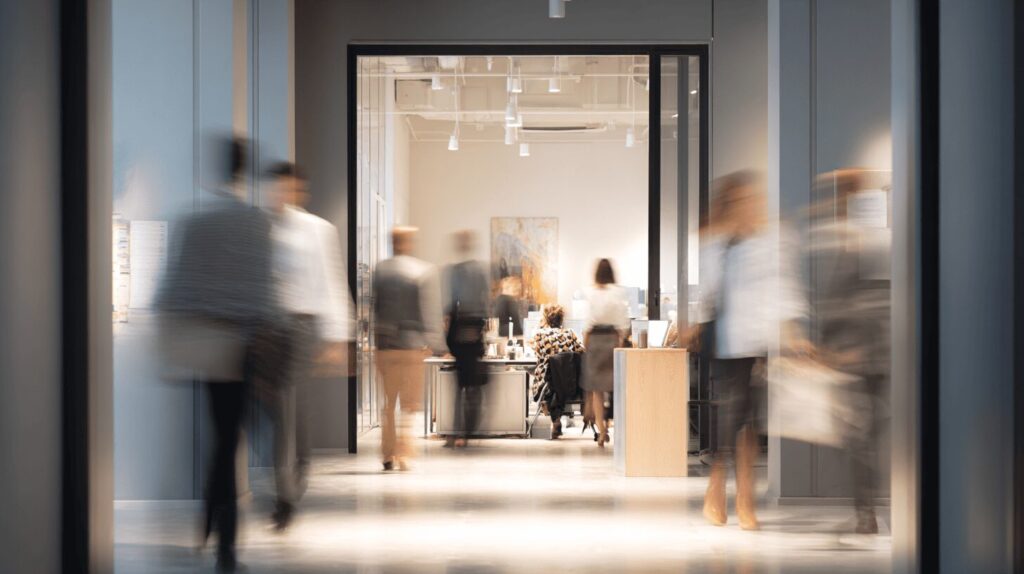
- Desk Near the Main Entrance: This position keeps you on high alert. It can be beneficial for roles that require you to be aware of who is coming and going, but it can be taxing for tasks demanding deep concentration.
- Back to a Walkway: This is often the most challenging placement. It creates a sense of vulnerability and can lead to a scattered, anxious state of mind as people constantly pass behind you.
- Facing a Window: A view can be inspiring, but it can also become a source of “energy leakage,” where your attention drifts. Facing a window directly can also cause glare, while having it behind you creates backlighting issues for video calls.
- Corner or Edge Desks: A desk in a corner or against a wall provides a sense of stability and enclosure, which is excellent for focus. However, be mindful that it doesn’t isolate you from team dynamics.
- Center of a Team Pod: This position fosters collaboration but can come with high levels of interruption and visual noise, making focused solo work difficult.
To remedy these challenges, small adjustments can make a significant difference. If your back is to a walkway, a chair with a high back can create a symbolic shield. If you face a distracting area, use a monitor or a small plant to create a soft visual boundary.
Desk Orientation for Your Role
Let your professional function guide how you orient yourself within your given space.
- Creatives & Strategists: A position that offers a wider view of the office can stimulate expansive thinking. An open left side is traditionally thought to encourage initiative. Avoid facing a blank wall, which can feel creatively stifling.
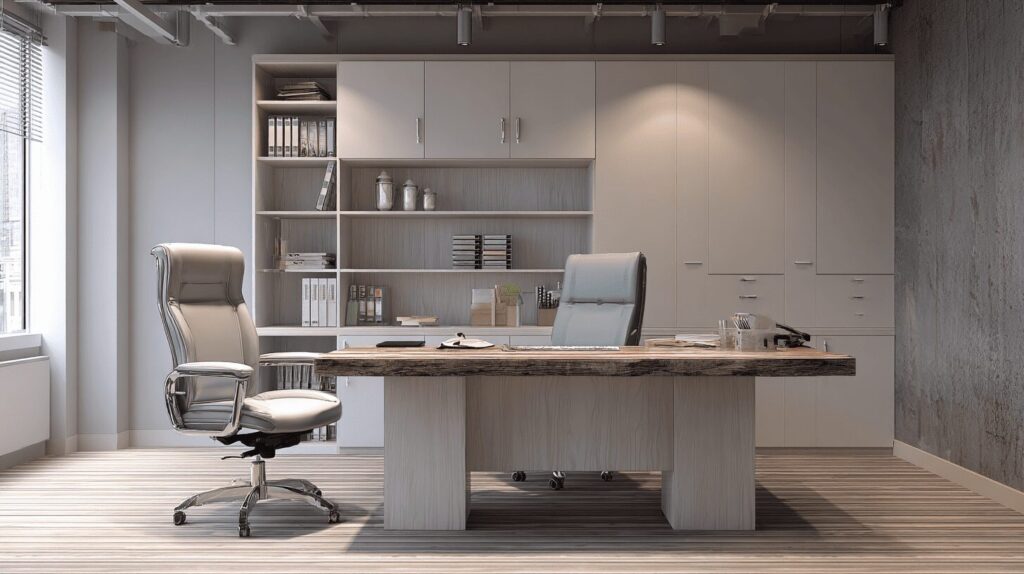
- Managers & Team Leads: The “command position”—where you can see the entrance to your area without being directly in line with it—is ideal. A solid wall or bookshelf behind you provides a sense of backing and authority, projecting stability to your team.
- Analysts & Programmers: An inward-facing orientation with low visual noise is key. A desk facing a wall or a quiet corner of the office can minimize distractions and support the deep concentration needed for complex, detailed work.
- Sales & Client-Facing Roles: An open, approachable orientation fosters a dynamic flow. You want to be visible and accessible. A desk positioned to easily greet colleagues or turn toward collaborative zones feels more engaging.
Your Desk and Team Dynamics
Your workstation’s placement sends subtle cues about your role and relationship with your colleagues. In classical terms, the left side of your desk is associated with new ideas and growth, while the right is linked to implementation and stability.
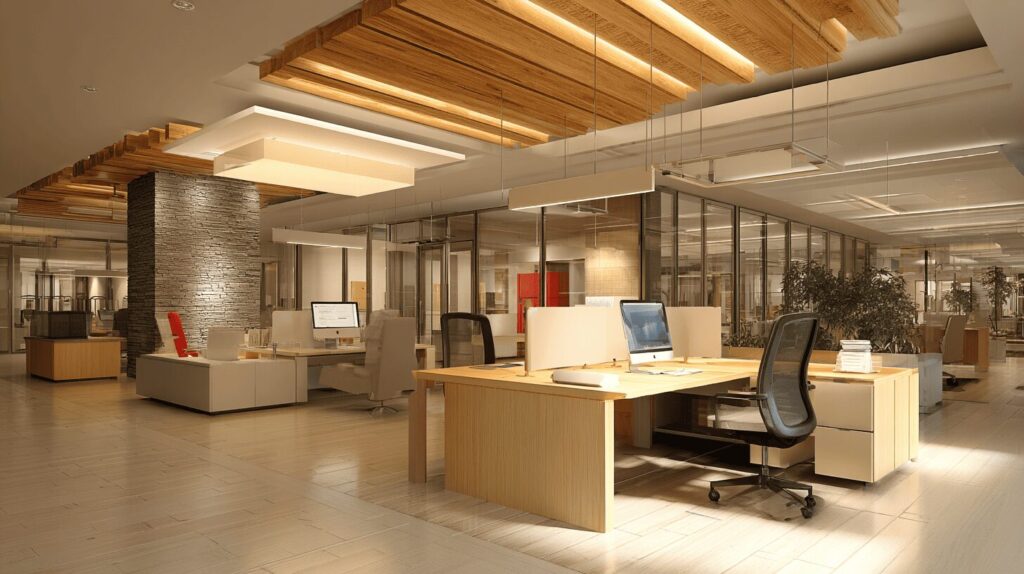
Keeping your left side more open can encourage new opportunities and interaction. Having a stable element, like a cabinet or wall, to your right can foster a sense of grounded execution. If you sit with your back to your supervisor’s line of sight, you may feel scrutinized. If you are hidden from view, your contributions may go unnoticed. Being aware of these spatial power dynamics allows you to make conscious choices, even if it’s just angling your chair slightly differently.
For Office-Based Zoom Calls
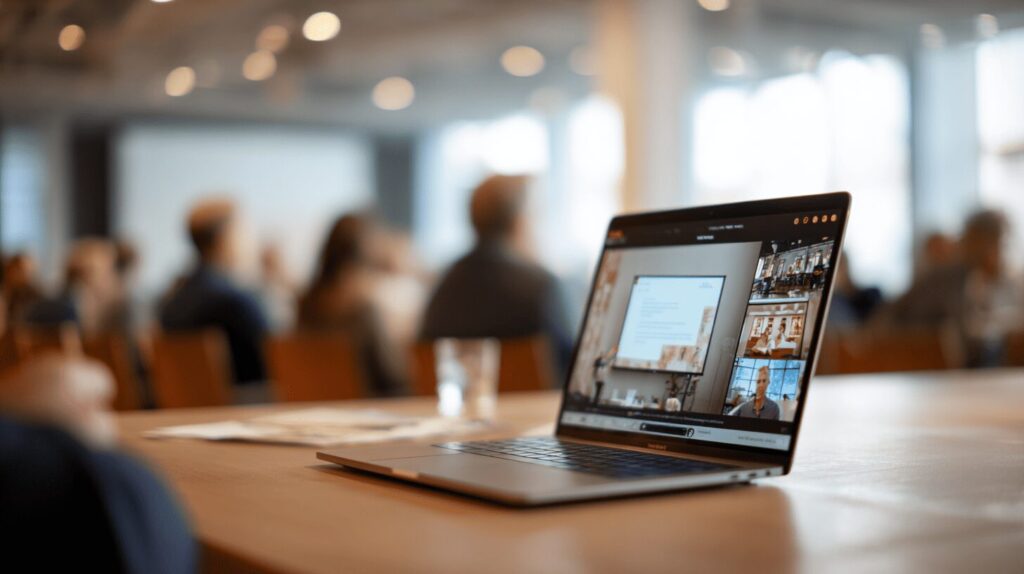
In a hybrid world, your on-camera presence is crucial, even from your office desk.
- Lighting: Try to face a soft light source. Avoid sitting with a bright office window directly behind you, which will turn you into a silhouette. If possible, use a small desk lamp to illuminate your face from the front.
- Backing: Your background should feel stable and professional. A neutral wall, a non-distracting art piece, or a bookshelf works well. Be mindful of who or what might appear in your background as colleagues walk by.
- Camera Height: Position your camera at eye level. This conveys equality and presence. Looking down can feel dismissive, while looking up can appear subordinate.
A Practical Workstation Self-Check
Take a moment to gently assess your current desk setup.
- If your back is to a busy corridor: Can you add a high-backed chair or a plant to create a protective buffer?
- If you face a chaotic view: Use your monitor or a small, neat stack of books to create a focused visual field.
- If you are by a distracting window: Shift your chair to a 90-degree angle to the window, so the view is to your side, not directly in front.
- If your job needs deep focus: Minimize visual noise in your direct line of sight. Turn away from high-traffic zones if possible.
- If your job needs visibility: Ensure your sightlines are open and you are not physically hidden from your team.
- For video calls: Check your background for visual clutter and ensure your face is softly lit from the front.
Small Shifts, Significant Impact
Arranging your workstation is an act of professional self-care. It’s not about finding a “lucky” spot, but about creating a rhythm that supports your well-being and effectiveness. A slight change in your chair’s angle or the addition of a simple desk accessory can reshape your entire workday.
Experiment with these small, intentional shifts and notice the subtle changes in how you feel and perform. When your physical space honors your body’s need for security and your mind’s need for clarity, your work will settle into its most natural and powerful flow.