
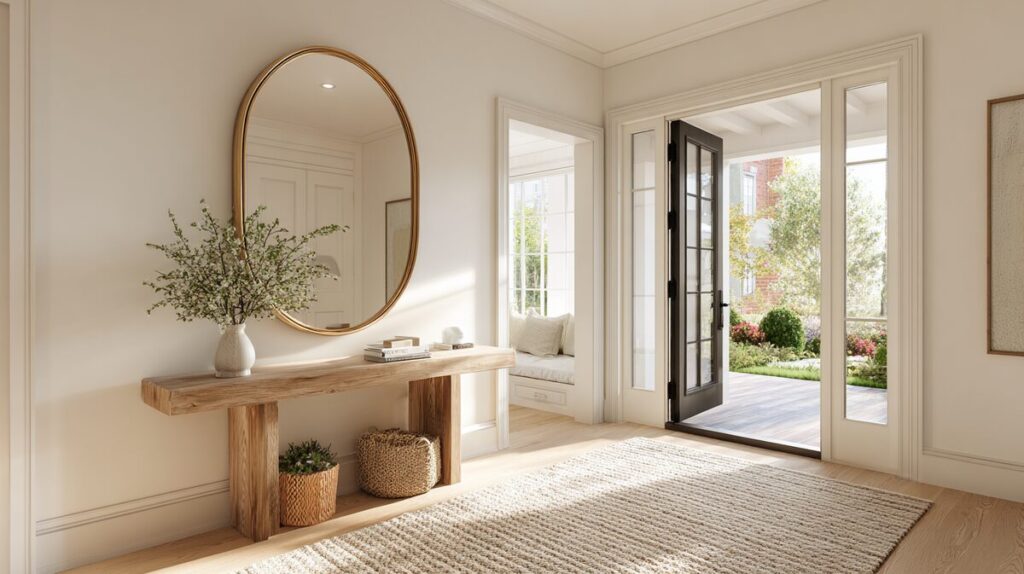
In the language of design, a mirror is an artist of light and space. It can make a small room feel expansive, scatter sunlight into dim corners, and duplicate a cherished view, creating depth and dimension. To me, a mirror is more than decoration—it’s a vessel for light.
In Feng Shui, mirrors hold an even deeper significance. They are not just decorative accents but instruments of movement—capable of guiding energy, shaping perception, and influencing how we feel within a space. Used with intention, they can amplify positivity and create a natural current of harmony in the home.
The Reflective Power of Mirrors in Feng Shui
Among all Feng Shui tools, mirrors are perhaps the most dynamic. Their ability to shape the movement of Qi makes them both powerful and delicate to use. Picture energy as a current of light flowing through your rooms — a mirror placed with care can draw this light into dim corners, expand narrow spaces into a sense of openness, or pull the beauty of the outdoors into your home. Yet when used carelessly, it can also scatter chaotic energy or even push beneficial Qi away. Understanding this balance between reflection and redirection is key to using mirrors with intention and grace.
Placing a mirror is not just a design choice; it is an act of energy calibration. Before hanging one, pause to consider what you wish to amplify or transform. Are you hoping to brighten a dark hallway, expand a small room, or symbolically invite abundance? Let that purpose guide your placement.
Reflect What You Wish to Amplify
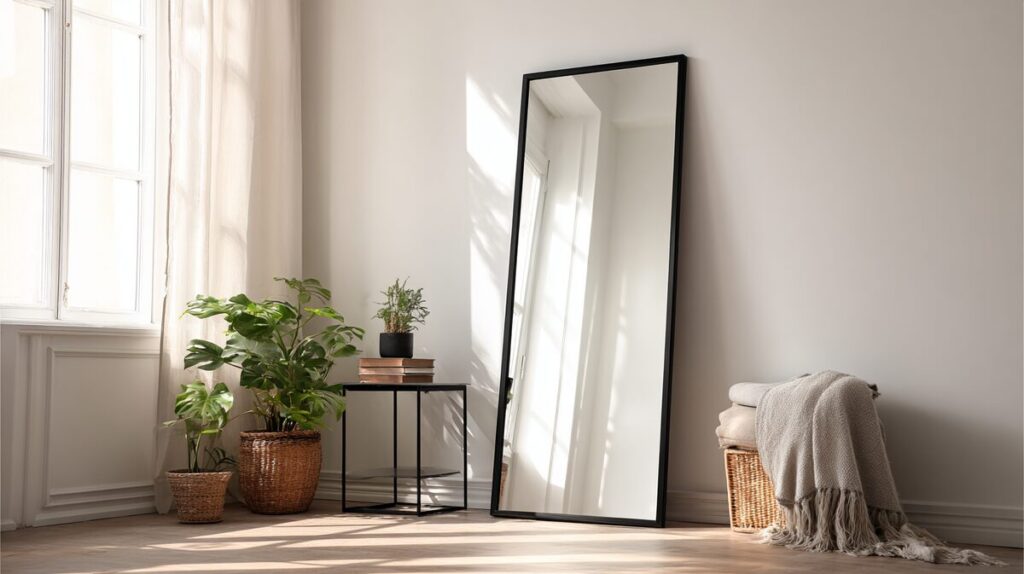
A mirror doubles everything it sees — energy, imagery, and emotion alike. When positioned to reflect beauty or light, it becomes a quiet source of joy and renewal.
- A beautiful view: If a window frames a lush garden or serene landscape, a mirror on the opposite wall draws that natural vitality indoors, extending the calm of nature into your living space.
- A source of light: Reflecting a chandelier or sunlit window scatters brightness throughout the room, infusing it with active, life-affirming Yang energy.
Use Mirrors to Correct Spatial Imbalances
Mirrors are often called “the aspirin of Feng Shui” because of their ability to ease architectural imbalances and redirect stagnant flow.
- Expanding narrow spaces: In long, tight hallways, a mirror placed along the side wall creates the illusion of width and slows the rushing pace of Qi, bringing the passage into gentle equilibrium.
- Completing missing areas: In homes with irregular layouts, such as an L-shaped floor plan, a mirror on the wall bordering the missing corner symbolically restores completeness, allowing energy to circulate fully once again.
When used with intention, mirrors transform from mere reflections into instruments of harmony — guiding light, space, and energy into alignment with the rhythm of your life.
Mirror Placement by Room: Where Balance Begins
As Qi moves from the entrance to the heart of the home, mirrors act as quiet guides — shaping how energy expands, softens, or settles in each space. Their placement tells a story of how we welcome, connect, rest, and renew. What follows is a room-by-room reflection on how to use mirrors not only for beauty, but for balance.
The Entryway: A Welcoming Whisper of Opportunity

The entryway, often called the “mouth of Qi,” is where the world’s energy first enters your home. Its mirror placement is paramount.
Do: Allow a mirror on a side wall near the entrance to capture and amplify the light, reflecting an inviting scene or a beautiful plant. This graceful gesture symbolizes the welcoming of prosperity and opportunity, guiding positive Qi gently further into your sanctuary. Ensure it is large enough to reflect your full figure, a nod to wholeness and completeness.
Don’t: Position a mirror directly facing the front door. This acts as a barrier, symbolically bouncing wealth, opportunities, and positive Qi back out before they have a chance to settle. Similarly, avoid reflections of downward staircases, which can suggest a draining of energy.
In my own home, there’s a mirror near the entrance—not directly facing the front door, but about five or six feet inside. Because a large window sits opposite the main door, the mirror on the side wall captures and softens the natural light, making the space feel open and luminous.
The Living Room: Cultivating Social Harmony
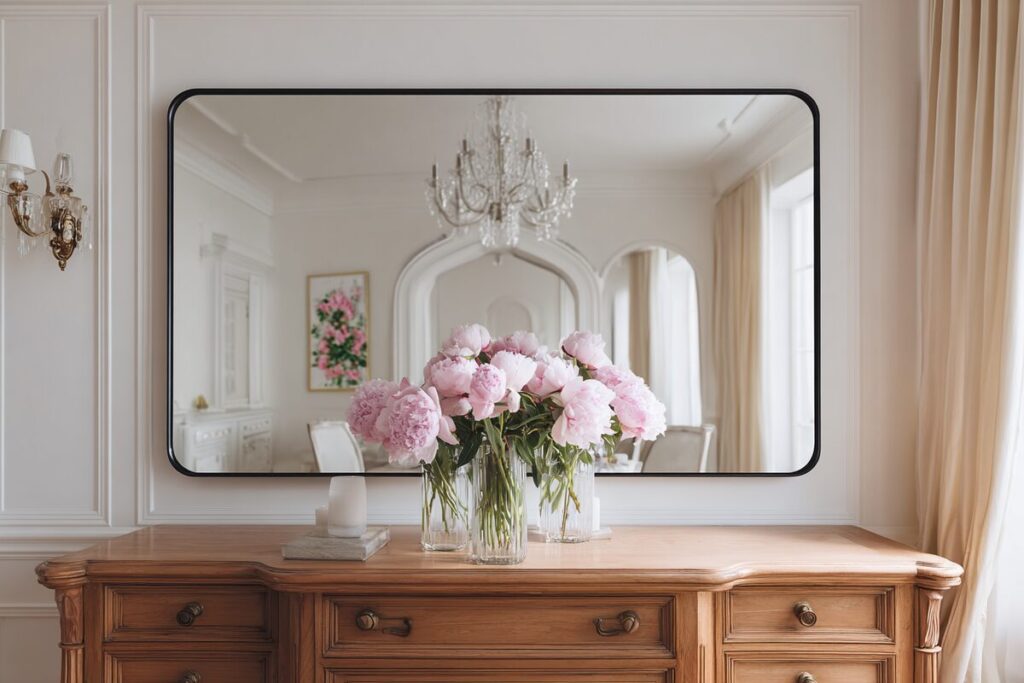
In the heart of your home, the living room, mirrors become a canvas for connection and spaciousness. If you’d like to explore how layout and furniture influence this dynamic, see my guide on Feng Shui for the Living Room.
Do: Place a mirror to reflect an element of beauty — a vibrant piece of art, the lushness of indoor plants, or the gentle glow of natural light. This magnifies the positive essence of these features, encouraging lively conversation and a sense of collective joy.
Don’t: Allow a mirror to reflect the back of a sofa or cluttered shelves. This can inadvertently create a sense of vulnerability for those seated or magnify any visual chaos, disrupting the room’s harmonious flow. Instead, let it be a clear reflection of community and light.
The Bedroom: A Sanctuary for Rest
The bedroom is a sacred, Yin space, designed for deep rest and rejuvenation. Mirror placement here requires utmost sensitivity. Curious how your bedroom layout affects rest and energy? Explore Bedroom Feng Shui Fixes for Better Sleep
Don’t: Position a mirror to directly face your bed. This is believed to create an active energy that can disrupt peaceful sleep, or symbolically invite a “third energy” into a relationship. The reflection can also stir you awake in the quiet of the night.
Solution: If a mirror is essential, ensure it is positioned so you cannot see your reflection while lying in bed. For built-in mirrors, consider elegant solutions like covering them with a soft, beautiful fabric at night, or integrating them into a wardrobe with sliding panels. The goal is to allow energy to settle quietly, supporting profound restoration.
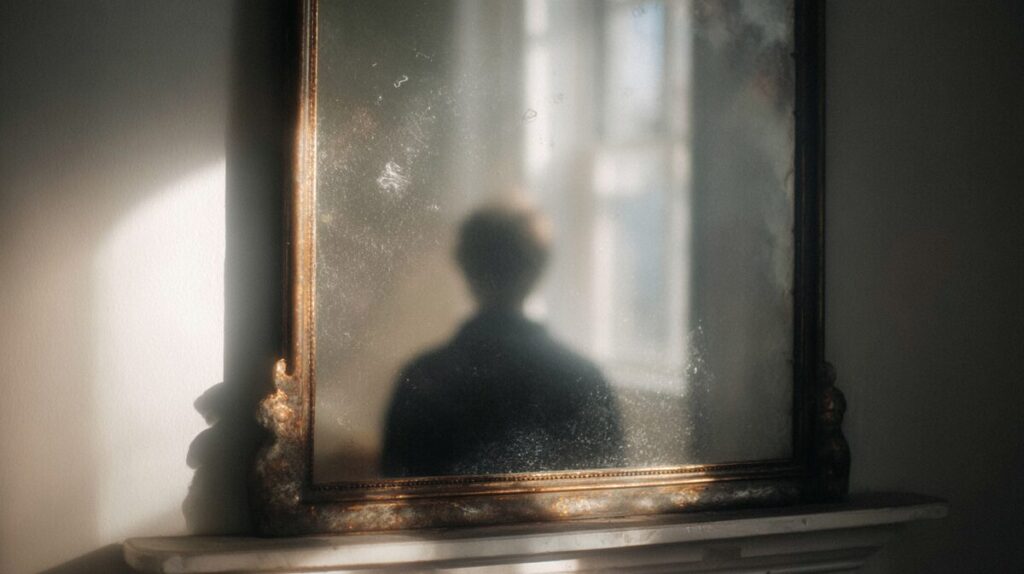
In dimly lit spaces—such as dark hallways or bedrooms at night—reflections can appear distorted, shadowy, and slightly “off,” triggering the question: “Is that me, or someone else?” This sensation aligns with the uncanny valley effect described in psychology—the closer something seems to human, yet not quite, the more it unsettles us.
The Bathroom: Renewal Without Disturbance
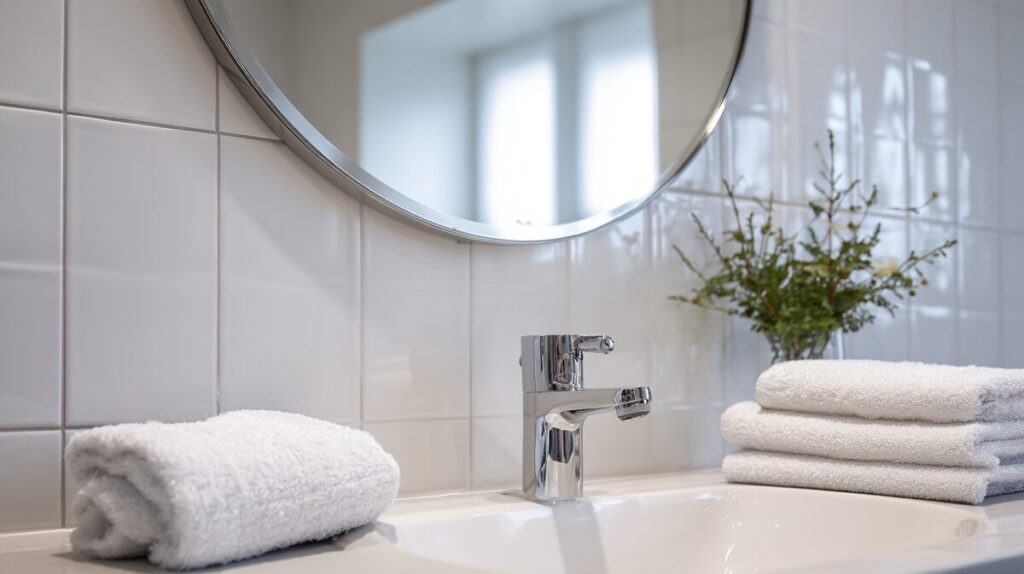
Bathrooms, while places of cleansing and renewal, naturally gather heavier or more transitional Qi. Mirrors are functional necessities here, but their placement can still be mindful. To explore how bathroom design influences energy flow and harmony, see my article on Bathroom Feng Shui Myths: Why Ensuite Placement Matters More Than You Think.
Do: Keep bathroom mirrors impeccably clean and brightly lit. This maintains clarity and freshness, ensuring the space feels invigorating rather than stagnant.
Don’t: Position a mirror to directly face the bathroom door. This can cause unsettled energy to push outward into the rest of your home. To contain and harmonize the flow, always keep the bathroom door closed when not in use.
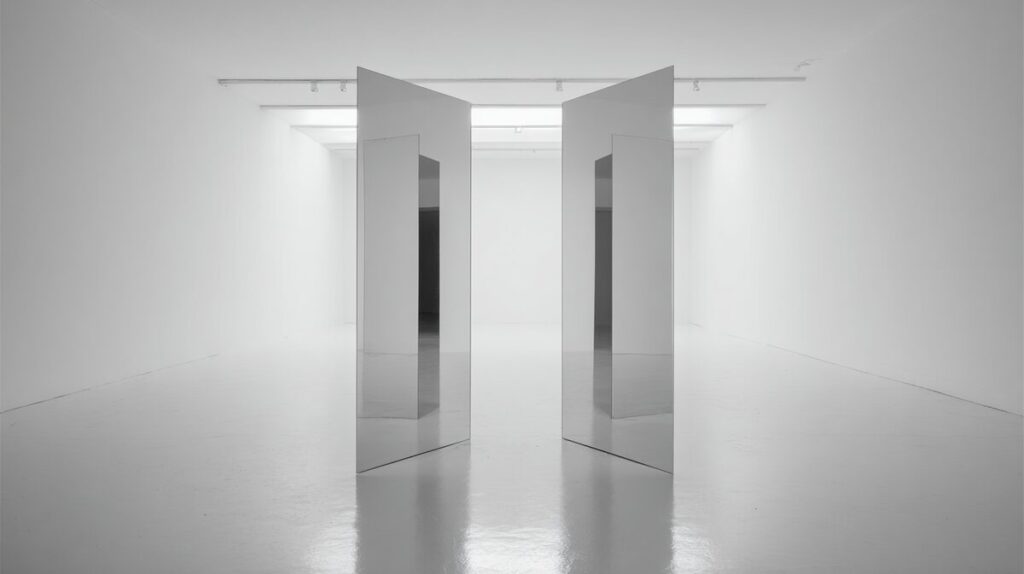
There are mirror arrangements that make me deeply uncomfortable. For instance, in bathrooms where two walls are covered with mirrors angled toward each other, the reflections multiply endlessly, forming what looks like an infinite corridor. This illusion breaks our intuitive sense of space and often evokes unease.
The Hallway: Guiding the Gentle Flow
Hallways are the energetic arteries of your home, connecting different spaces. Mirrors can assist in their smooth, intentional flow.
Do: Use mirrors to brighten dark or narrow passages, creating an illusion of space and encouraging a gentle, meandering movement of Qi.
Don’t: Place a mirror at the very end of a long corridor. This can abruptly halt the energetic circulation, causing Qi to crash rather than flow. Instead, stagger mirrors along side walls, creating a soft visual rhythm that guides energy smoothly through the space.
Where Reflection Becomes Flow
Integrating mirrors into your home with Feng Shui principles is a journey of awareness. It encourages you to see your space not just as a collection of objects, but as a living, breathing environment. Start with one mirror. Observe the light it catches and the feeling it brings to the room. Notice what it reflects—both literally and energetically. When arranging mirrors, I care most about light and psychological safety.
The most underrated wisdom in Feng Shui about mirrors is this: space itself is a psychological mirror. By making these thoughtful adjustments, you are doing more than just decorating. You are sculpting the energy of your home, creating a space that reflects harmony, supports your well-being, and fills your life with light.