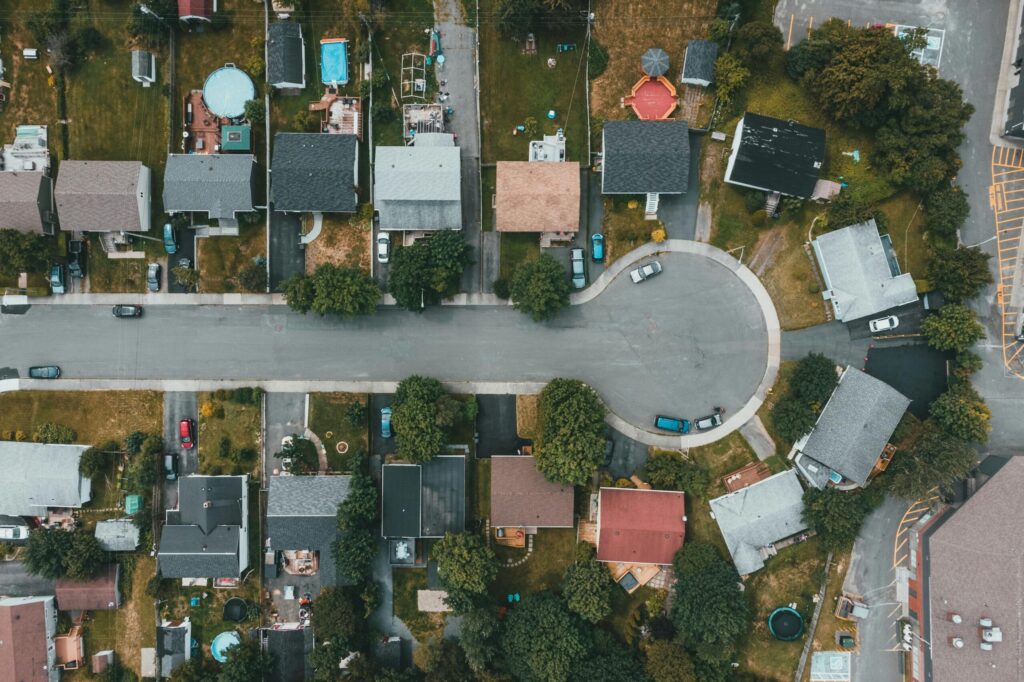
In many parts of the United States, especially in suburban Southern California, cul-de-sacs are widely seen as desirable places to live. They are often associated with quieter streets, improved safety, and a family-friendly environment.
From a feng shui perspective, the evaluation of cul-de-sacs is not a matter of labeling them as inherently good or bad. Instead, the focus lies on understanding how this road structure functions and identifying the key aspects that warrant closer examination.
What Is a Cul-de-Sac, Spatially Speaking?
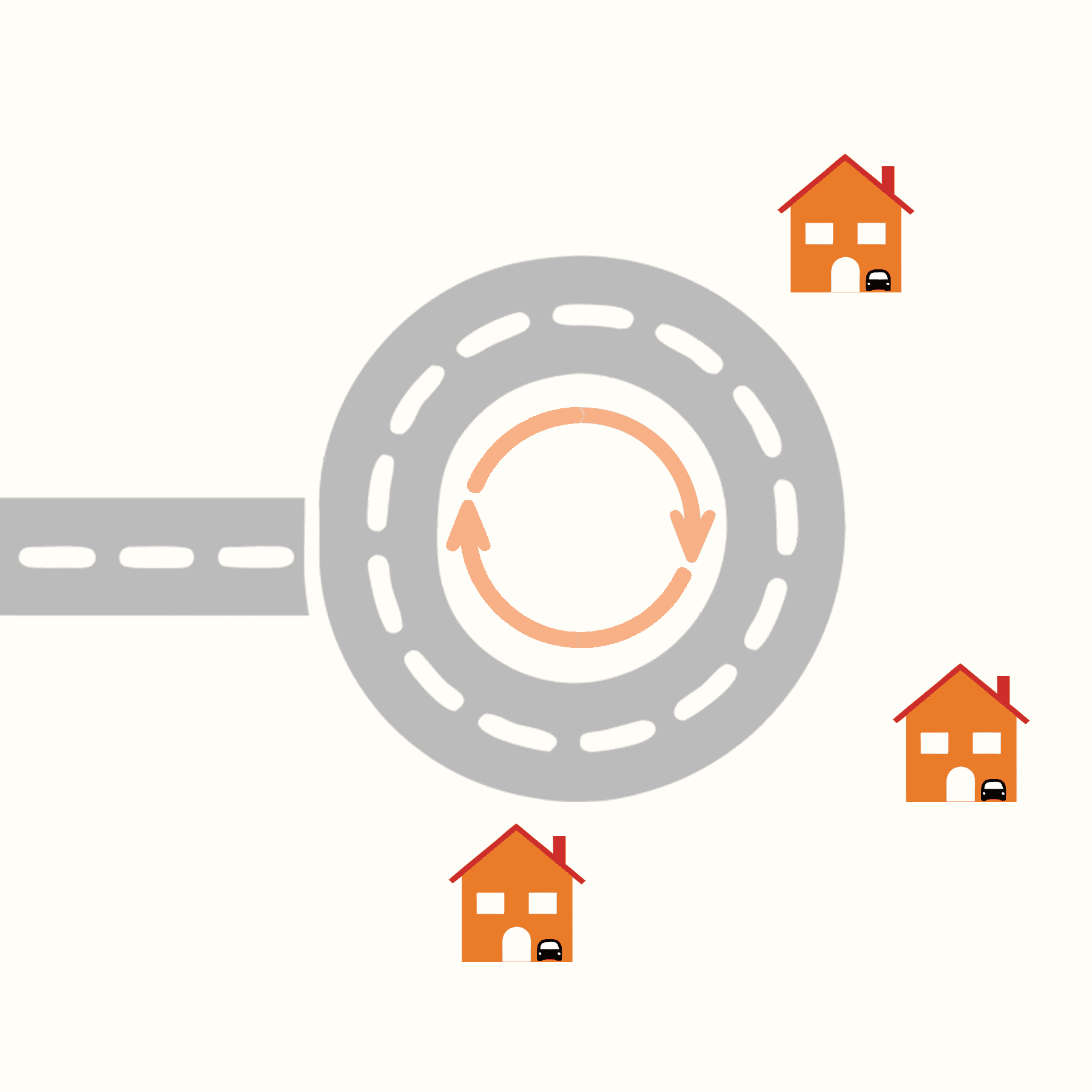
A cul-de-sac is not simply a road that “ends.” Spatially, it functions as a gathering and turning structure, where movement slows, turns, and redistributes. In feng shui, this relates closely to the Bird side (the Vermilion Phoenix position), the open space in front of a home that allows incoming movement to arrive and circulate before entering.
This differs significantly from what traditional feng shui refers to as dead-end alleys, because the environments are fundamentally different. In classical feng shui, dead ends are typically long, narrow lanes, enclosed on both sides and designed primarily for foot traffic rather than vehicles. In such settings, once energy enters, it has little opportunity to circulate. As a result, energy — whether physical or psychological — tends to feel blocked, compressed, and stagnant.
Most Southern California cul-de-sacs are typically wide, open, and circular or fan-shaped, allowing cars to turn smoothly and exit without difficulty. Because of this, they do not automatically create the kind of energy stagnation associated with traditional dead-end streets. This allows cul-de-sacs to function as a well-proportioned Ming Tang (Bird side). For more context on the Bird side within the Four Celestial Animals framework, see my article on the Four Celestial Animals.
Density and Shared Front Space in Cul-de-Sac
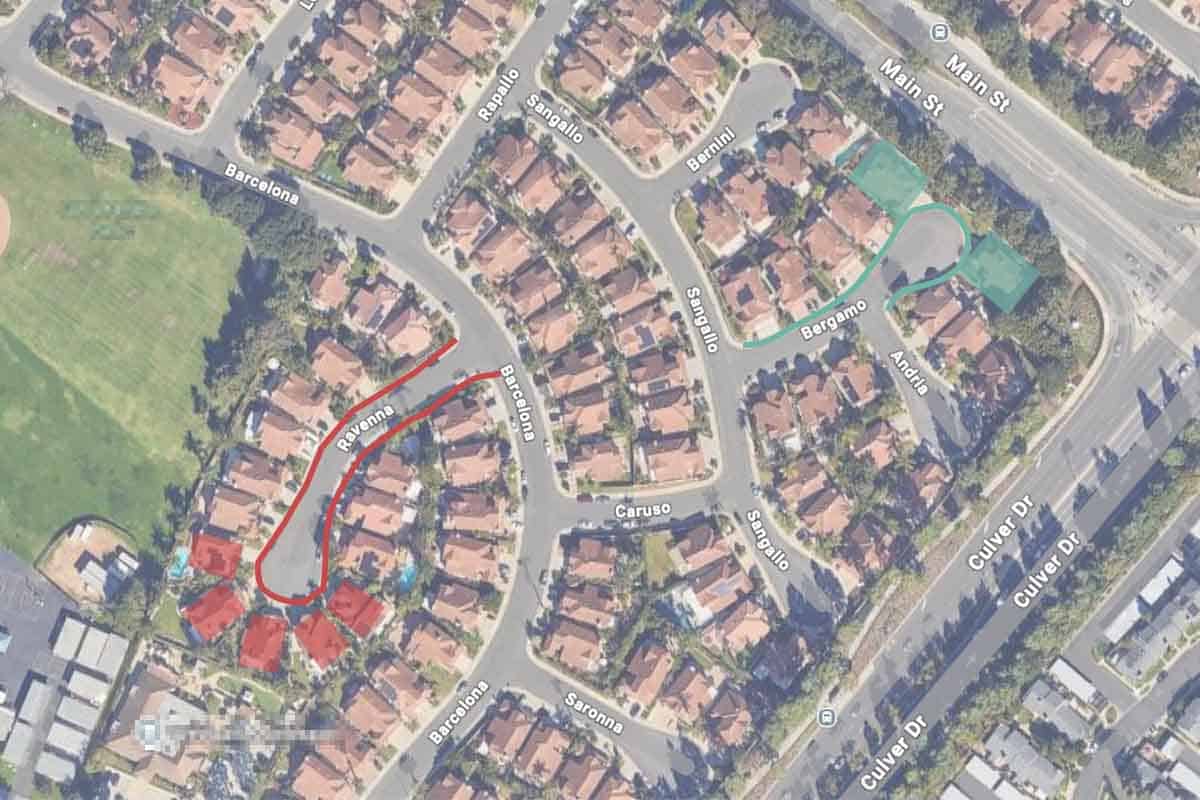
In Southern California, the physical dimensions of cul-de-sacs are relatively standardized due to planning and fire access regulations. Consequently, differences in living experience are less often determined by the size of the cul-de-sac itself, and more by how many homes share that space. When a cul-de-sac accommodates a higher number of homes, each residence effectively receives a smaller portion of the shared front-facing area. Front yards become narrower, setbacks are compressed, and the space in front of each home has less room to open, buffer, and receive movement. From a feng shui perspective, When Bird side is overly constrained, its ability to perform that role is naturally reduced.
Higher residential density along a cul-de-sac also increases the likelihood of irregular or sharp-angled lots. Because the circular frontage of a cul-de-sac is finite, adding more homes requires the available arc to be divided more aggressively.
Home Positions That Require Closer Evaluation
1. Homes directly aligned with the approach road
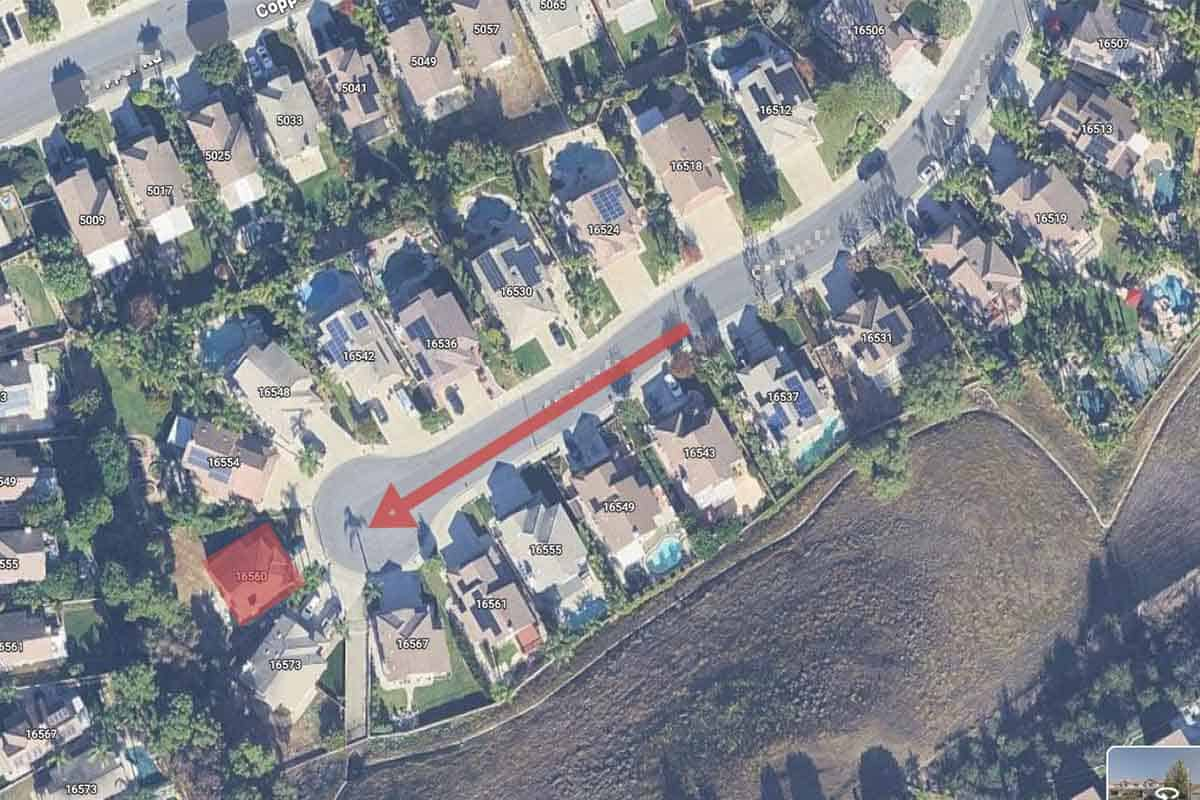
Even within a cul-de-sac, not all homes experience the space in the same way. One of the most common situations that requires closer attention is a home directly aligned with the incoming road.
From a planning perspective, cul-de-sacs in Southern California are typically limited in length, usually around 400–600 feet. These limits help prevent the kind of extended, high-speed movement found on through streets. However, a home positioned directly along the approach still tends to carry more exposure and pressure than other locations within the same cul-de-sac, because it receives movement in a more concentrated and linear way than neighboring homes located along the curve.
2. Homes on Irregular or Sharp-Angled Lots
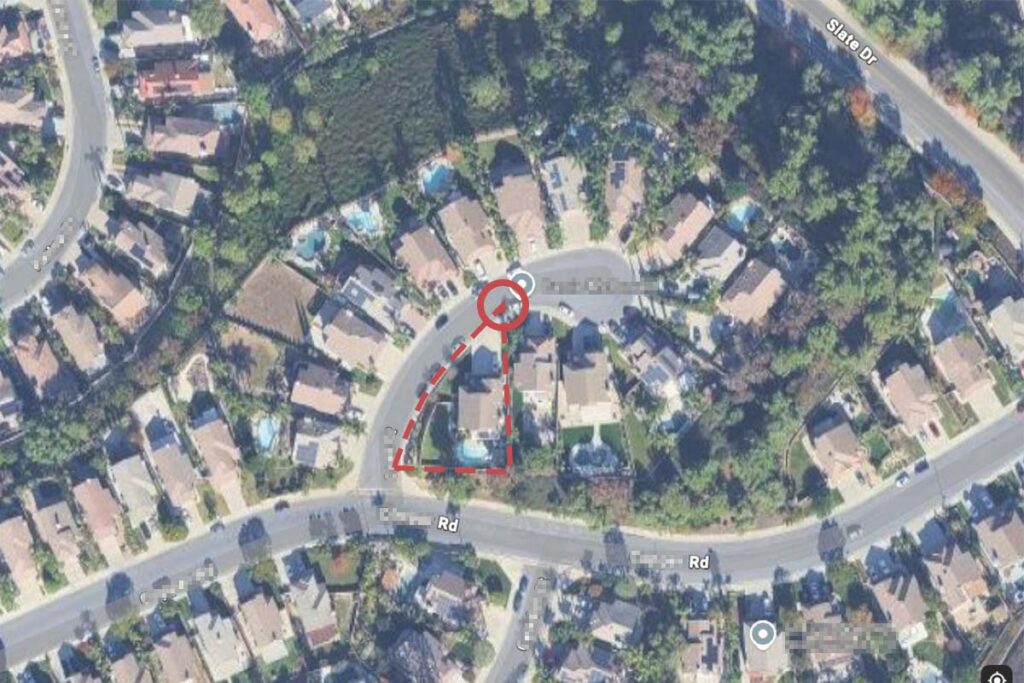
Unlike grid-based street layouts, cul-de-sacs and their connecting roads are inherently less regular in shape. As a result, it is common to see triangular or sharp-angled lots along secondary roads or within cul-de-sac layouts.
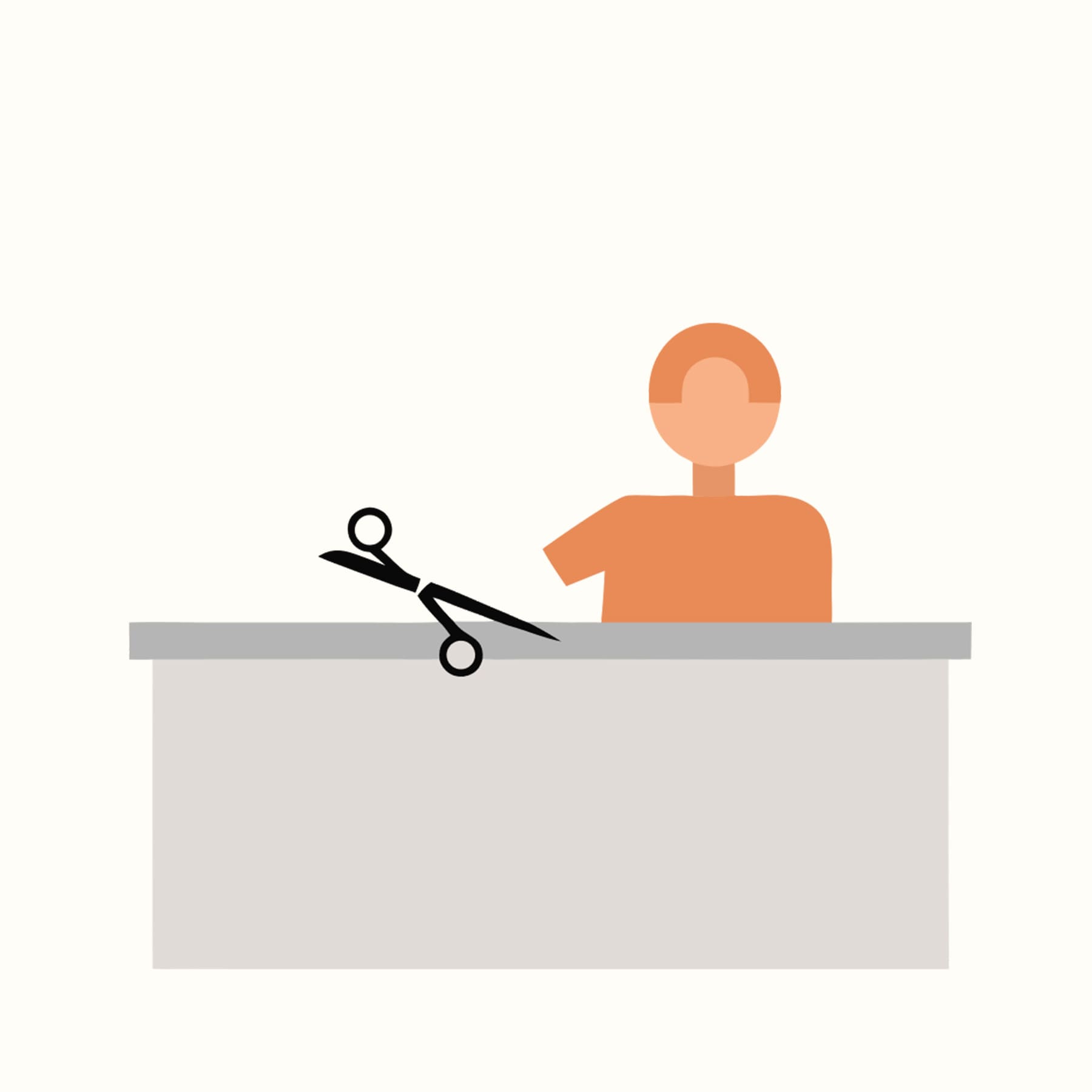
From a feng shui perspective, sharp angles are associated with pointed, aggressive, and abrupt energy. Rather than flowing gently, movement is perceived as cutting or piercing toward the home. A simple way to understand this effect is through everyday experience: imagine sitting at a table with a pair of scissors pointed directly at you. Even without physical contact, the orientation alone can create a sense of tension and unease.
3. Homes Affected by Overcrowding and Overlapping Access
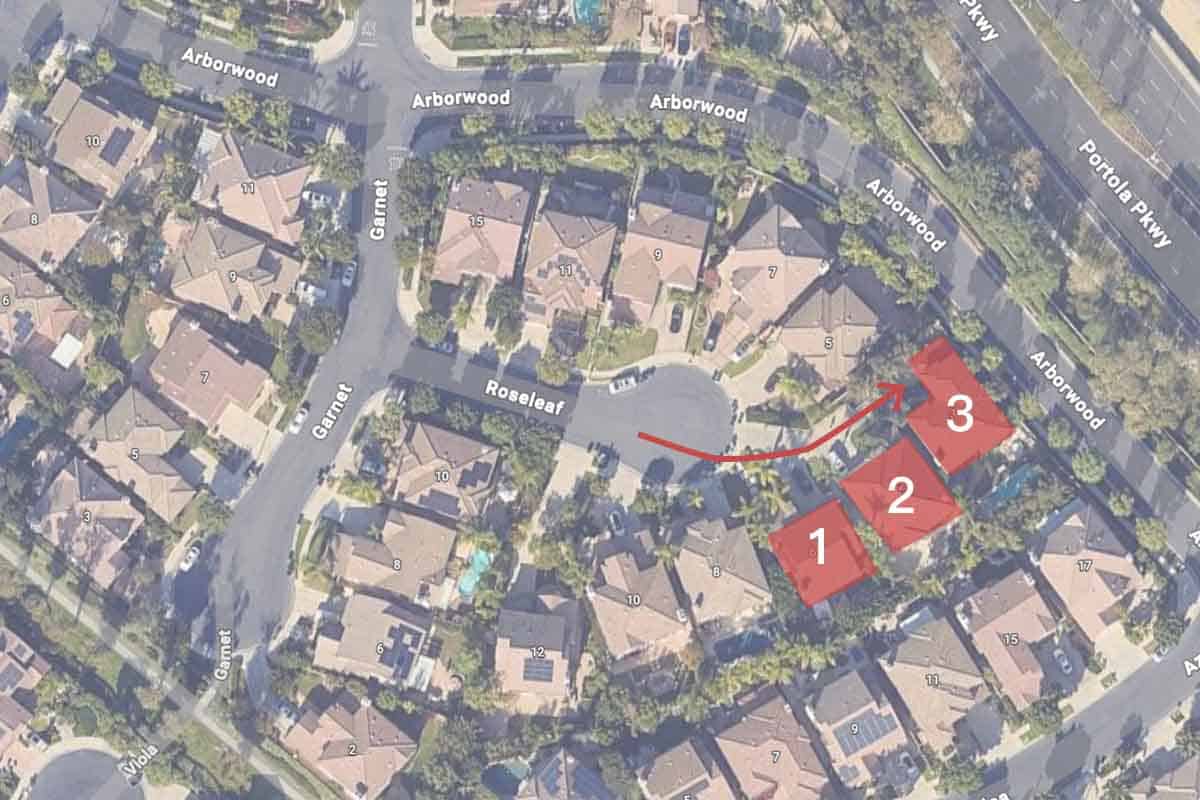
When too many homes are clustered within a cul-de-sac, access patterns can become compromised. In some layouts, residents must pass directly in front of neighboring homes in order to reach their own driveway or entrance. This creates practical inconveniences in daily movement, as well as ongoing concerns around privacy. From a spatial and feng shui perspective, homes located at the very end of the cul-de-sac often receive less direct and less supportive energy, compared to those with clearer and more independent access.