
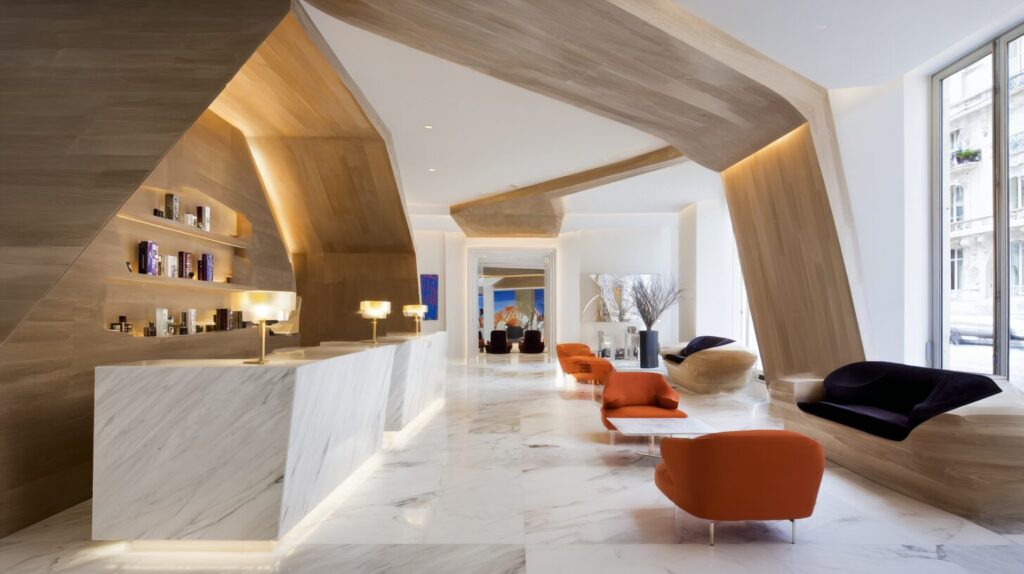
Consider the last time you walked into a business—a hotel, a clinic, or a corporate office. Before you spoke to a receptionist or checked a reservation, you felt something. In architecture and energetic design, the reception desk acts as the energetic ingress of a business. It is the filter through which all outside activity passes before becoming inside experience.
This entry point does more than simply mark a location; it sets the emotional tone of the entire space. Whether we are conscious of it or not, we are constantly reading our environments for cues of safety, status, and welcome. Research in environmental psychology suggests that people interpret spaces—and decide whether they feel comfortable in them—within the first seven seconds of arrival. We often think we react to people, but we react to spaces first.
First Principles of Reception Energy
To understand why some lobbies feel welcoming while others feel chaotic, we must look at the first principles of how space functions. The reception area is a convergence point for three distinct concepts:
- Qi Mouth (Feng Shui): The primary intake for energy.
- Navigation Node (Urban Planning): A decision point where people orient themselves.
- First-Contact Stimulus (Environmental Psychology): The initial sensory input that triggers a stress or relaxation response.
The mechanism that ties these together is flow. Just as water moves through a riverbed, people move through architecture. The layout determines the speed and quality of that movement. If a reception desk is positioned too close to the main doors, or in direct, rigid alignment with them, the energy scatters. This “rushing qi” creates a subconscious feeling of collision rather than arrival. A well-designed reception allows for a pause—a transition from the fast-paced exterior world to the curated interior environment.
Visible Energy
When we analyze a reception area, we first notice the tangible elements—the visible energy.
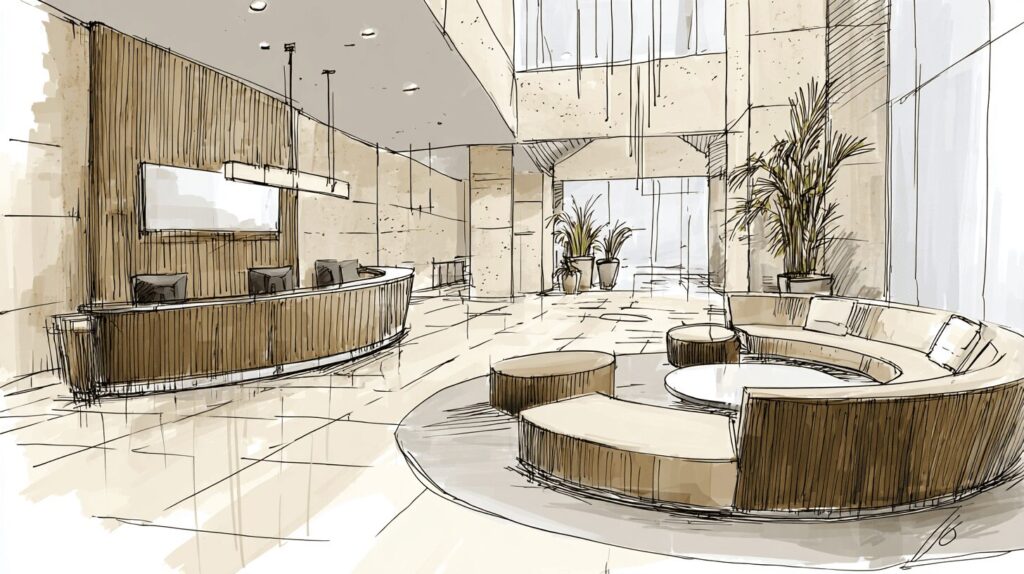
- Flow and Circulation: Does the layout guide you gently toward the desk, or does it force an awkward confrontation? Good circulation offers a clear, intuitive path that feels like a natural exhale.
- Spatial Proportion: A reception desk must command its space without dominating it. If the desk is massive within a small vestibule, it feels defensive. If it is tiny in a cavernous lobby, it feels unmoored and vulnerable.
- Lighting and Materials: Light dictates mood. Harsh, overhead fluorescents create clinical detachment, while layered, warm lighting invites intimacy. Natural materials—wood, stone, and textiles—ground the visual experience, signaling to our primitive brain that we are in a safe, resource-rich environment.
Invisible Energy
Beyond the physical layout lies the invisible energy—the felt experience that lingers after the visual assessment is done.
- The 7-Second Emotional Baseline: In those critical opening seconds, a visitor’s nervous system seeks a baseline. If the energy is chaotic, the visitor enters a state of high-beta brainwave alertness. If the energy is balanced, they shift into a calmer alpha state.
- Energy Scattering vs. Energy Settling: A poor layout scatters energy, making people feel flustered or rushed. A thoughtful layout settles energy, allowing the visitor to “land” fully before engaging in business.
- Unconscious Stress Transfer: We often forget that the reception staff are part of the energetic equation. If the desk placement leaves staff feeling exposed—for example, with their back to a window or corridor—they unconsciously transmit their low-level anxiety to every person they greet.
Case Observations
We can see these principles clearly when contrasting two distinct environments.
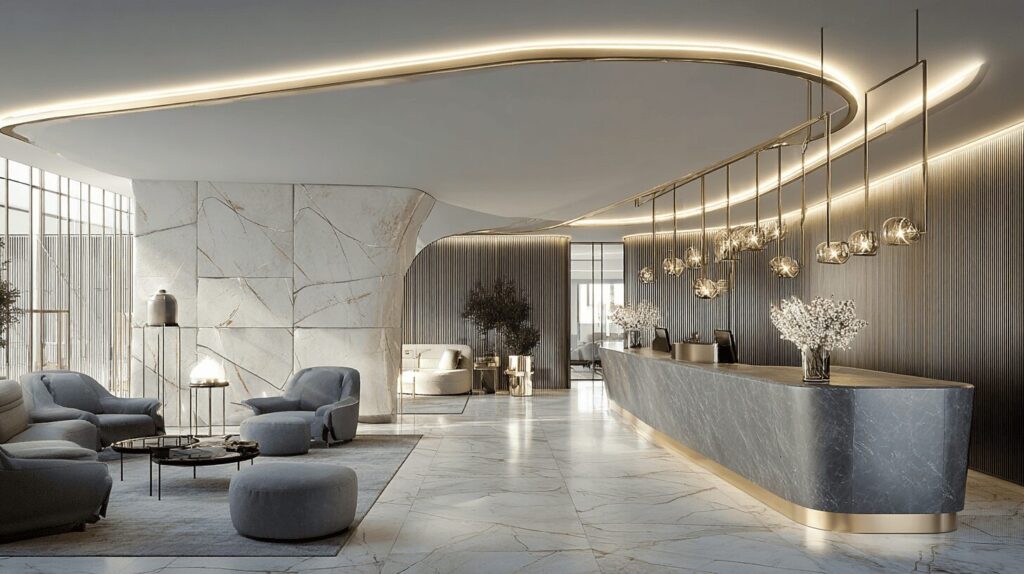
Park Hyatt New York: This space exemplifies mastery of flow. The circulation path is soft and meandering. Upon arrival, the reception is situated clearly on the left, while a lounge area opens on the right. This layout avoids a direct, confrontational head-on collision between the guest and the staff. The result is a calming effect where the visitor feels guided rather than processed.
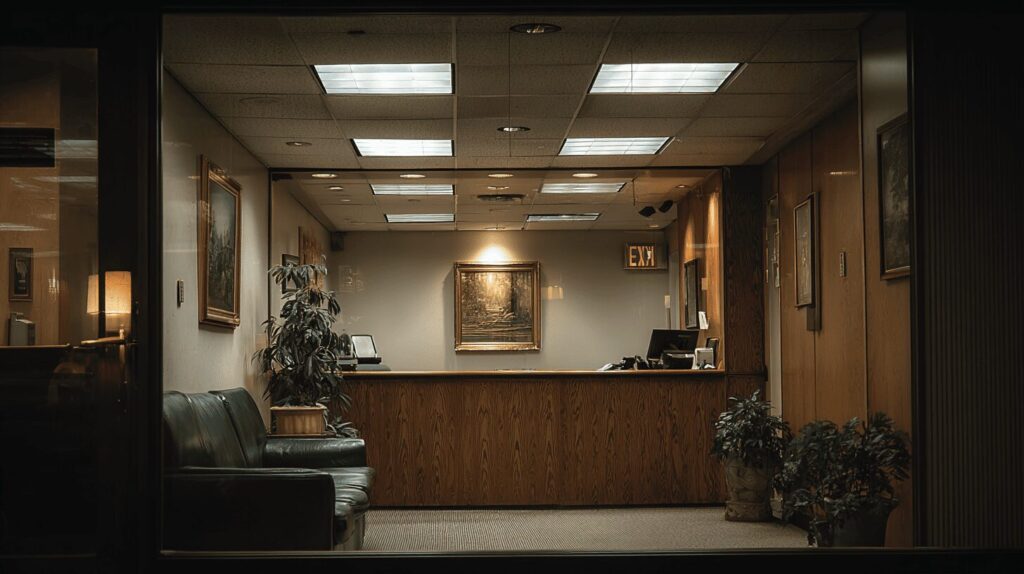
Older Law Offices: Contrast this with the traditional layout of many older legal firms. Often, the front desk faces the door directly in a narrow, dimly lit hallway. This “gun-barrel” alignment creates immediate tension and urgency. The visitor feels scrutinized the moment the door opens, creating a defensive atmosphere before a single word is exchanged.
Principles for Improving Reception Energy
To transform a reception area from a barrier into a bridge, consider these actionable principles:
- Avoid Direct Alignment: Ideally, the reception desk should not face the front door directly in a straight line. An offset position slows down the energy, allowing for a gentler approach.
- Create a Buffer Zone: Ensure there is ample space between the door and the desk. This “bright hall” (Ming Tang) allows qi to collect and settle before moving further into the office.
- Command Position: Position the desk so staff have a clear view of the entrance without being directly in the line of fire. They should have a solid wall behind them for energetic support.
- Soft Lighting: Replace glare with glow. Use lamps or indirect lighting to soften the edges of the room and warm the atmosphere.
- Spatial Breathing: Avoid overcrowding the entry. Leave negative space to allow the room—and the people in it—to breathe.
- Add Plants: Living greenery is one of the fastest ways to stabilize qi. A healthy, broad-leafed plant can soften sharp corners and calm emotions by reconnecting the indoors with nature.
- Reduce Visual Clutter: A cluttered desk signals a cluttered mind. Keep the reception surface clean to project clarity and competence.
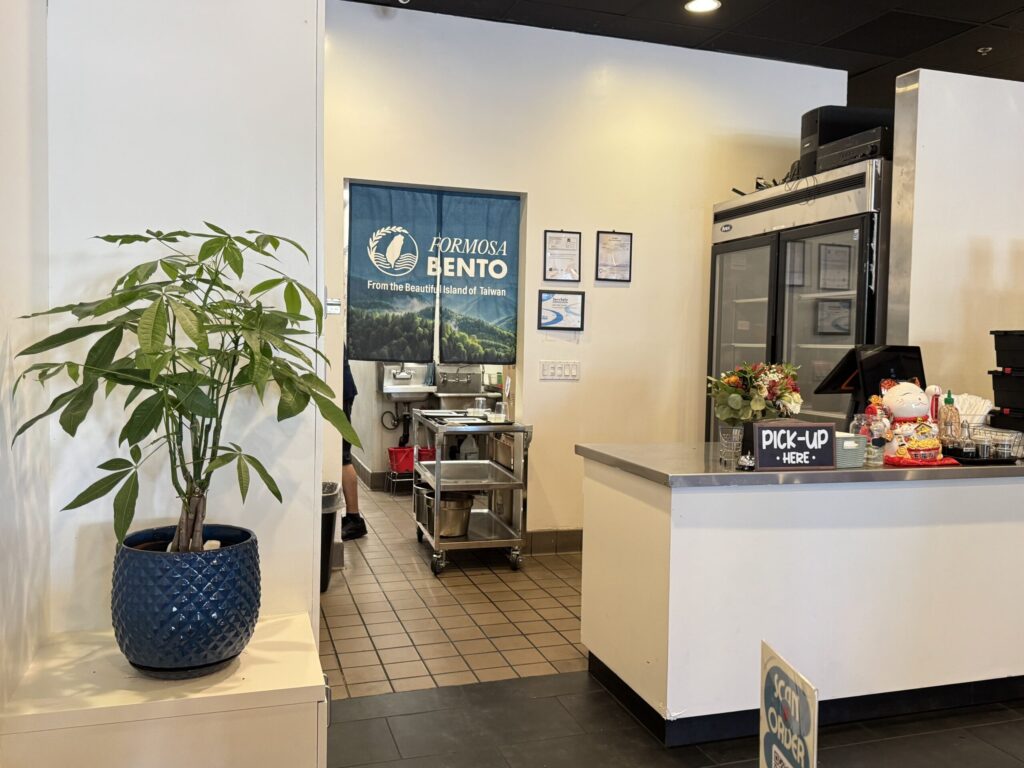
Ultimately, the reception area is more than furniture arrangement; it is a business’s energetic statement. It shapes the trust, comfort, and openness of every interaction that follows.
By blending the structural logic of urban planning with the sensitivity of Feng Shui, we can design spaces that honor the human need for transition. A truly good reception space does not just process visitors; it gives people a place to settle, breathe, and arrive fully before they meet another human being.