
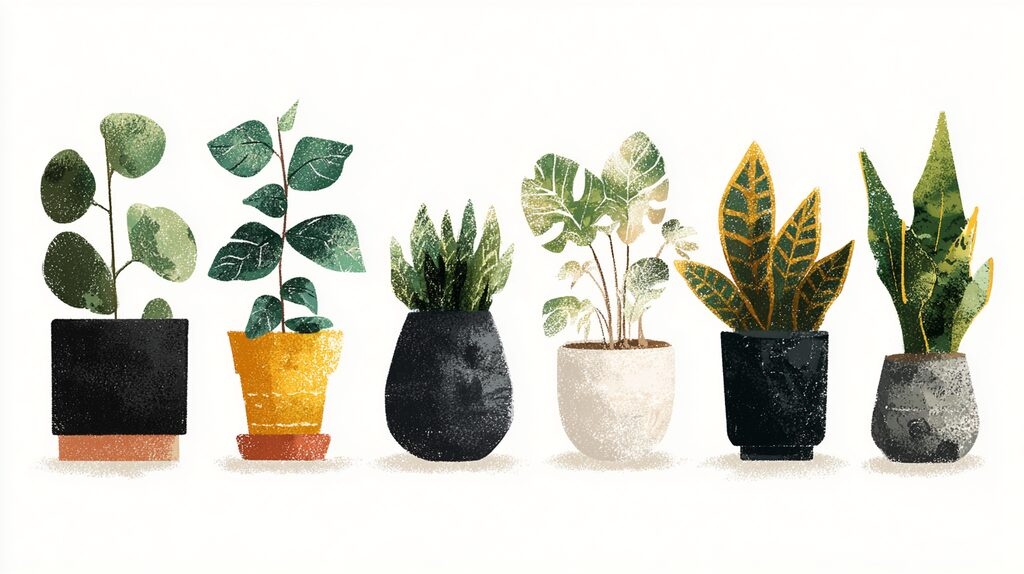
The integration of nature into human habitats, a practice now termed biophilic design, has been central to architectural and philosophical traditions for millennia. The ancient Chinese practice of Feng Shui, or “wind-water,” has long recognized the profound influence of living elements within a space. Plants, as embodiments of the Wood element, are considered vital tools for cultivating positive life force, or Qi. Their role extends beyond mere decoration; they are active participants in creating a balanced and harmonious environment.
Modern scientific inquiry has begun to validate these ancient principles. A landmark 1989 study by NASA identified common houseplants as effective purifiers of indoor air, capable of removing volatile organic compounds (VOCs) like benzene and formaldehyde. Subsequent research in environmental psychology has consistently demonstrated that the presence of indoor plants can reduce physiological and psychological stress, improve cognitive function, and enhance overall well-being. By examining specific plant choices and their strategic placement, we can leverage both ancient wisdom and contemporary science to transform our homes into sanctuaries of positive energy.
The Role of Plants in Feng Shui and Environmental Psychology
In the framework of the Five Elements, plants represent the Wood element, which is associated with growth, vitality, flexibility, and kindness. Introducing plants into a space is a direct method of fostering these qualities. From a scientific perspective, the visual presence of greenery triggers an innate, positive response in the human brain, a remnant of our evolutionary history in nature. This connection helps to lower heart rate and blood pressure, creating a calming effect.
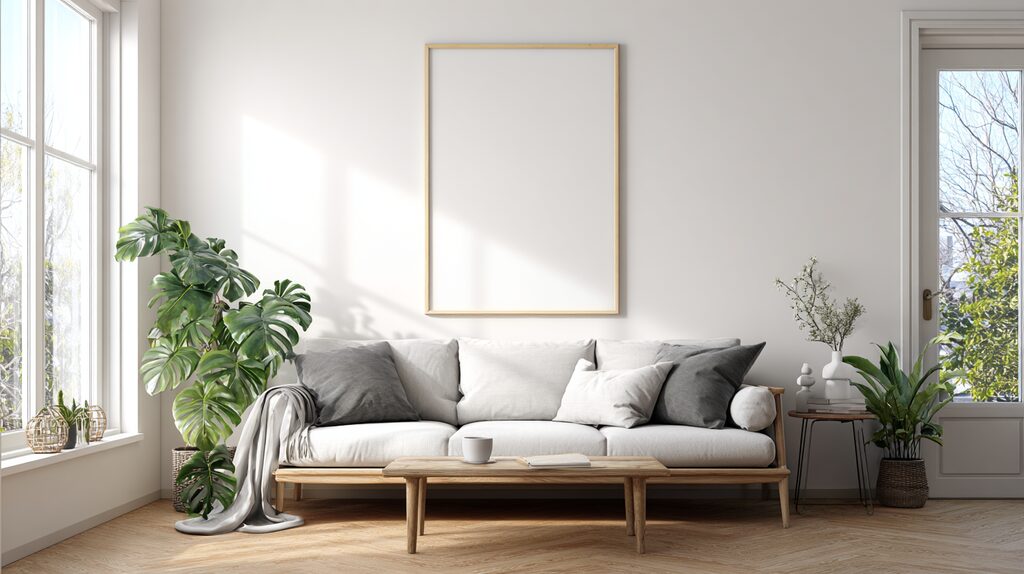
Plants also contribute to the energetic balance of a room by softening sharp corners or “poison arrows” created by angular furniture or structural beams. These sharp angles are believed to direct aggressive energy, but placing a lush, soft-leafed plant in front of them can diffuse this energy, promoting a smoother, more gentle flow of Qi throughout the space.
Best Feng Shui Plants for a Harmonious Home
The selection of plants in Feng Shui is intentional, favoring those with soft, rounded leaves and an upward growth habit, which symbolize nurturing energy and progress.
1. Money Tree (Pachira aquatica)
Growth and expansion. The Money Tree is a classic Feng Shui choice, cherished for its symbolic association with prosperity and opportunity. Its braided trunk and five-lobed leaves represent balance and harmony, while their upward reach signifies growth. Place it in the wealth corner — diagonally opposite the main entrance — to gently draw in abundance and support aspirations, whether in your home or workspace.
2. Monstera (Monstera deliciosa)
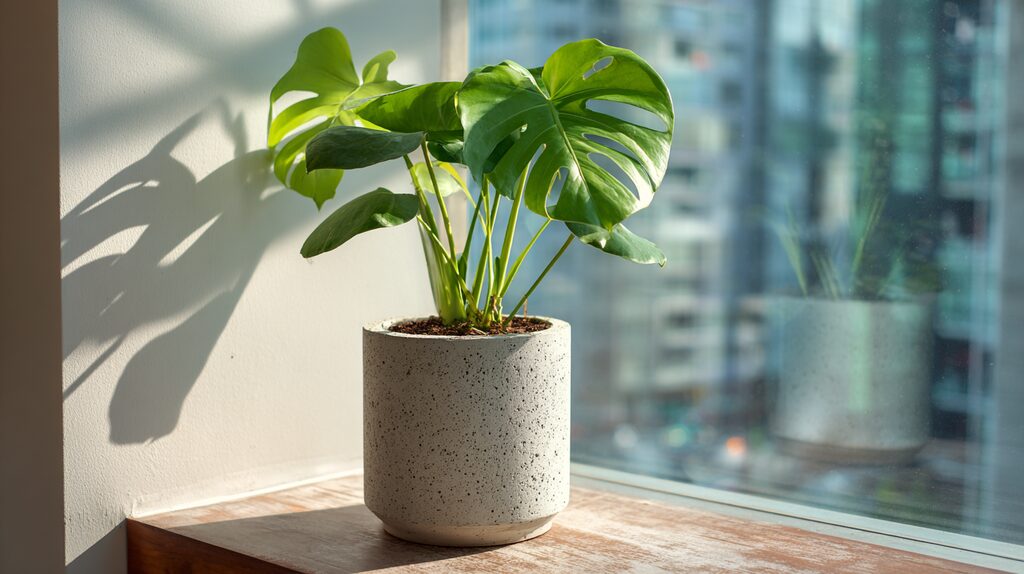
Longevity and calm. The Monstera’s iconic, broad leaves exude a natural serenity, creating a shield-like presence that grounds and soothes. Its ability to thrive and gracefully expand adds a sense of vitality, making it an ideal addition to living rooms or studies where focus and relaxation meet. This plant’s organic form softens harsh architectural edges, inviting a tranquil energy into shared spaces.
3. Rubber Plant (Ficus elastica)
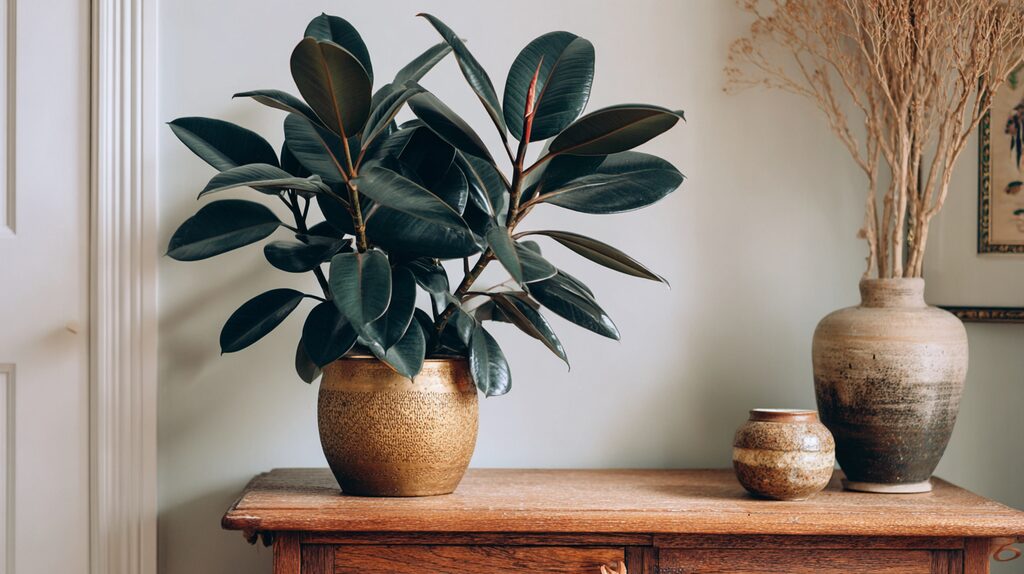
Grounding and protection. The Rubber Plant’s dense, rounded leaves provide a stabilizing presence, making it a natural choice for entryways or areas with sharp corners. Its glossy foliage reflects light while tempering the rigidity of modern interiors, creating a smoother flow of energy. As it grows, it brings a quiet sense of abundance and rooted strength, perfect for balancing dynamic spaces.
4. Fiddle Leaf Fig (Ficus lyrata)
Harmony and upward growth. With its sculptural beauty and bold, violin-shaped leaves, the Fiddle Leaf Fig is a statement plant that unites aesthetic balance with emotional warmth. Its upward-reaching form symbolizes personal and collective growth, making it a thoughtful addition to living rooms or dining areas where connection and harmony thrive.
5. Snake Plant (Dracaena trifasciata)
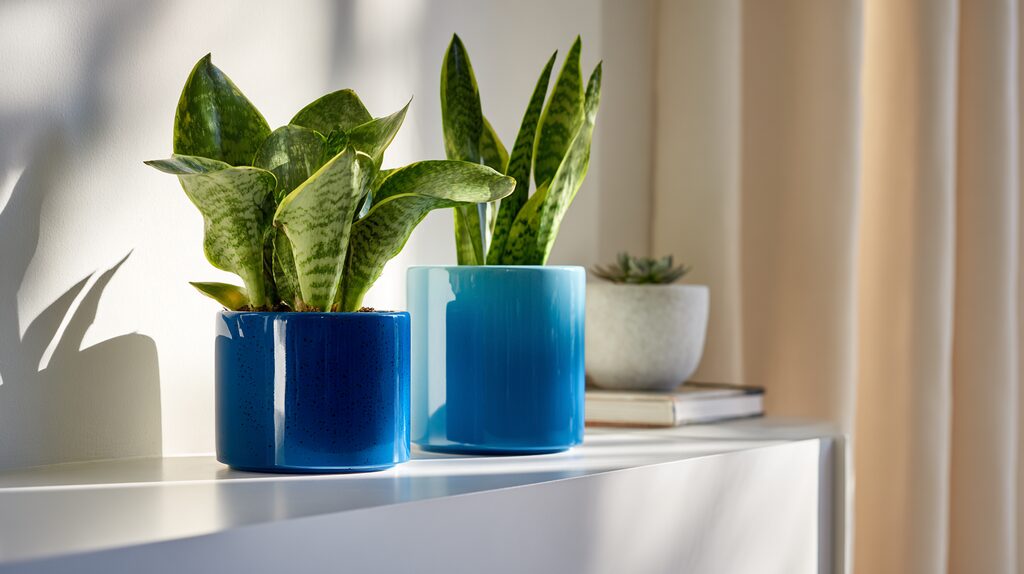
Clarity and resilience. The Snake Plant’s upright, architectural leaves embody persistence and clarity, cutting through stagnant energy to create flow. Known for purifying air — even at night — it’s an excellent choice for bedrooms or entryways, where its steady presence fosters a grounded calm. Its clean, vertical lines bring focus and order, complementing both modern and traditional interiors.
Placement: Where Energy Takes Root
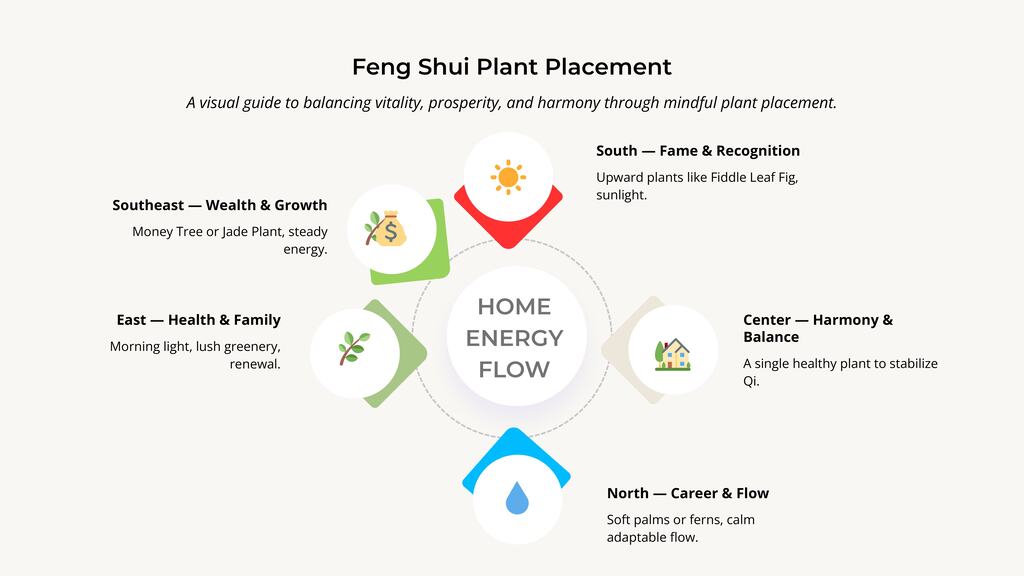
In Feng Shui, placement is poetry. Each direction of a home resonates with its own current of life — from health to recognition, from connection to renewal. When plants are positioned with awareness, they do more than fill corners or decorate windows; they become living conductors, tuning our spaces toward balance and vitality.
East: Health and Family Vitality
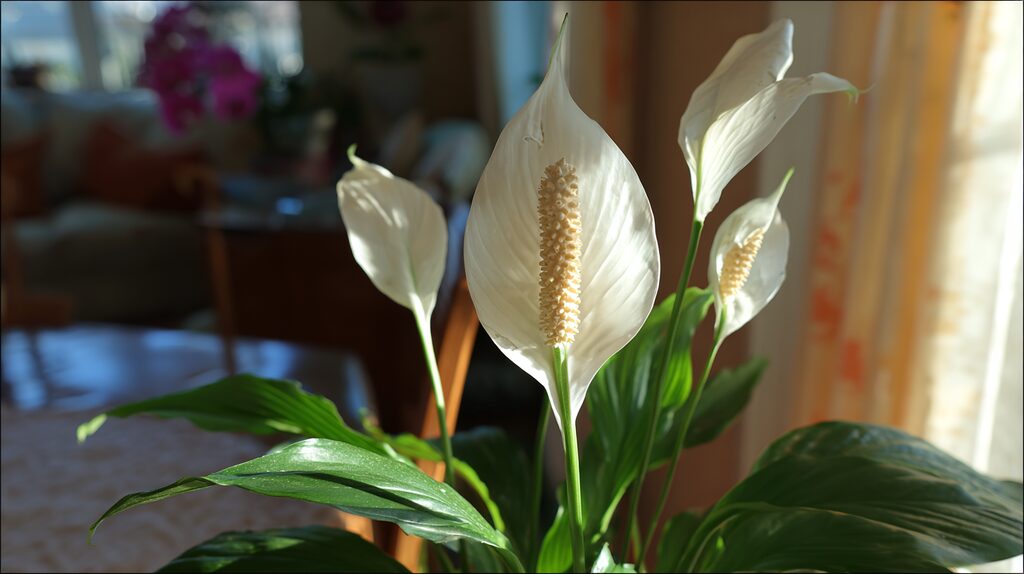
The East sector aligns with the rising sun, embodying renewal, vitality, and the foundational energies of family connection. Governed by the Wood element, this area is ideally suited for fostering growth and robust health. Placing lush, vibrant green plants here acts as an amplifier for the home’s inherent life force, cultivating physical wellness and strengthening familial bonds. A thriving Monstera or a serene Peace Lily positioned near an east-facing window can symbolize fresh energy each morning, signifying new beginnings and continuous rejuvenation. To further harmonize this sector, pair your chosen plant with natural light or a planter crafted from natural wood, amplifying the gentle, restorative Qi of this direction in harmony with classical Feng Shui principles.
Southeast: Wealth and Abundant Growth
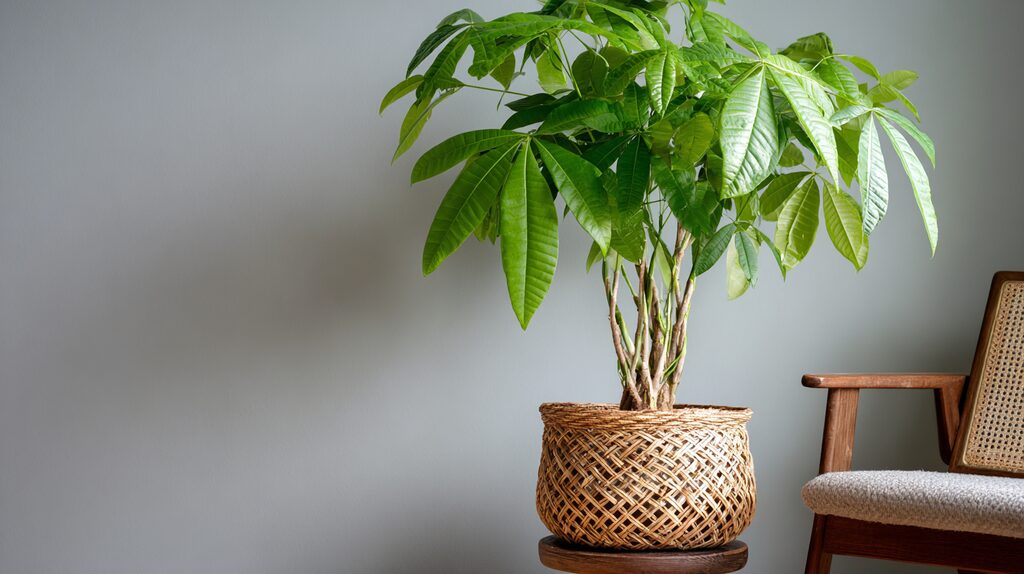
Complementing the East, the Southeast also belongs to the Wood element, but its energetic expression is geared towards abundance and financial expansion. This makes it an auspicious location for plants traditionally associated with prosperity, such as the Money Tree (Pachira aquatica) or the resilient Jade Plant (Crassula ovata). The energy here flourishes on consistency and stability – healthy soil, mindful watering, and a calm, uncluttered environment are paramount. These practices ensure that “wealth Qi” can effectively take root and grow. From a design perspective, pair greenery with a subtle source of illumination, such as a warm-toned lamp or an elegantly placed candle, can further activate and energize this corner without overwhelming its natural inclination towards steady accumulation.
South: Fame and Recognition
The South sector is intrinsically linked to the Fire element, which, in the cyclical paradigm of the elements, is nourished by Wood. Consequently, plants judiciously placed here can enhance visibility, bolster self-confidence, and support personal expression – the very essence of being seen and recognized for one’s contributions. Upward-growing plants, such as the majestic Fiddle Leaf Fig (Ficus lyrata) or architectural Bird of Paradise (Strelitzia reginae), are particularly effective. These vertical forms direct energy upwards, symbolizing aspiration and achievement. To maintain elemental balance, consider complementing these plants with accents of red or warm-toned décor, which harmonize with the Fire element without overpowering it. A bright, open aspect—particularly with access to natural sunlight—serves as the most potent activator of positive Qi in this zone, fostering an atmosphere where one’s efforts are naturally recognized and celebrated.
North: Career Path and Flow of Opportunities
The North corresponds to the Water element, a powerful force that nourishes growth and guides the flow of life’s opportunities and career progression. While excessive greenery can metaphorically ‘dampen’ this calm, introspective sector” — just smoother syntax, strategically chosen plants can gently support professional momentum.
One or two plants featuring soft, arching leaves, such as a delicate Bamboo Palm (Chamaedorea seifrizii) or a lush Boston Fern (Nephrolepis exaltata), can subtly evoke fluidity and adaptability. To further enhance this effect, integrate reflective surfaces like glass, mirrors, or even a small, tranquil water feature. These elements collectively echo the nature of Water, promoting an environment conducive to intellectual clarity and the smooth navigation of one’s career trajectory.
Center: Harmony and Integration
The very heart of the home acts as a central nexus, gathering and distributing energy to all other directions. A healthy, well-illuminated plant positioned here functions as a vital stabilizer, imparting freshness and vitality to the entire household. Because the center represents Earth energy, balance the plant’s Wood element with warm, grounding materials. Planters crafted from terracotta, natural ceramic, or sturdy stone provide this essential counterbalance. The key in this pivotal area is to avoid overcrowding; a single, vibrant plant is typically sufficient to maintain an open, clear, and harmonious flow of Qi, ensuring that the home’s core remains a source of balance and renewal.
Near Electronics and Workspaces: Calming the Modern Current
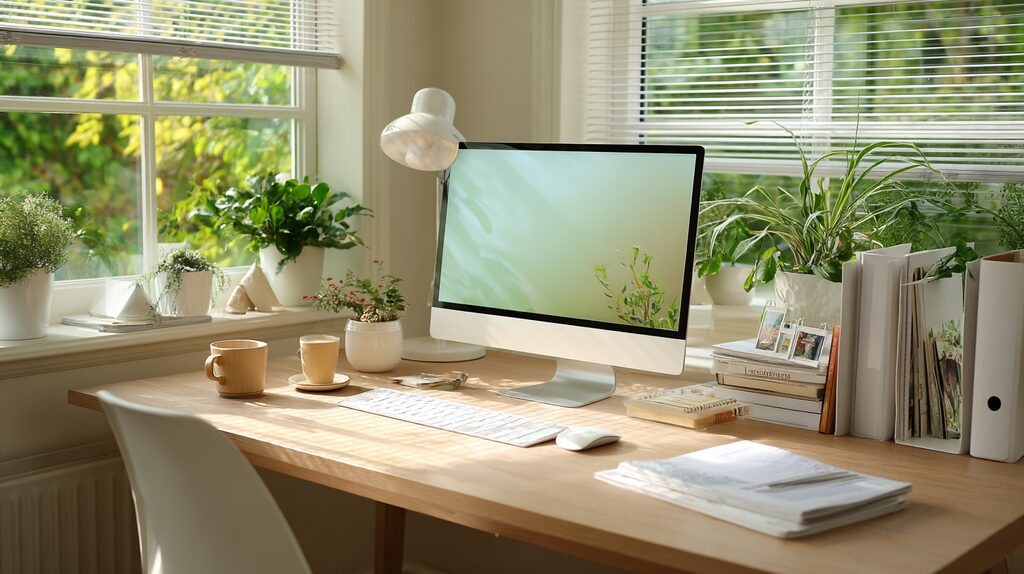
In our digital lives, screens and devices constantly generate active, stimulating energy that can leave the mind unsettled. Placing a Snake Plant or Rubber Plant near your desk or television offers a natural counterbalance — a quiet anchor that grounds the space and refreshes the air. These living companions soften the invisible intensity of modern life, restoring calm focus and aligning contemporary function with ancient harmony.
Plants to Use with Caution
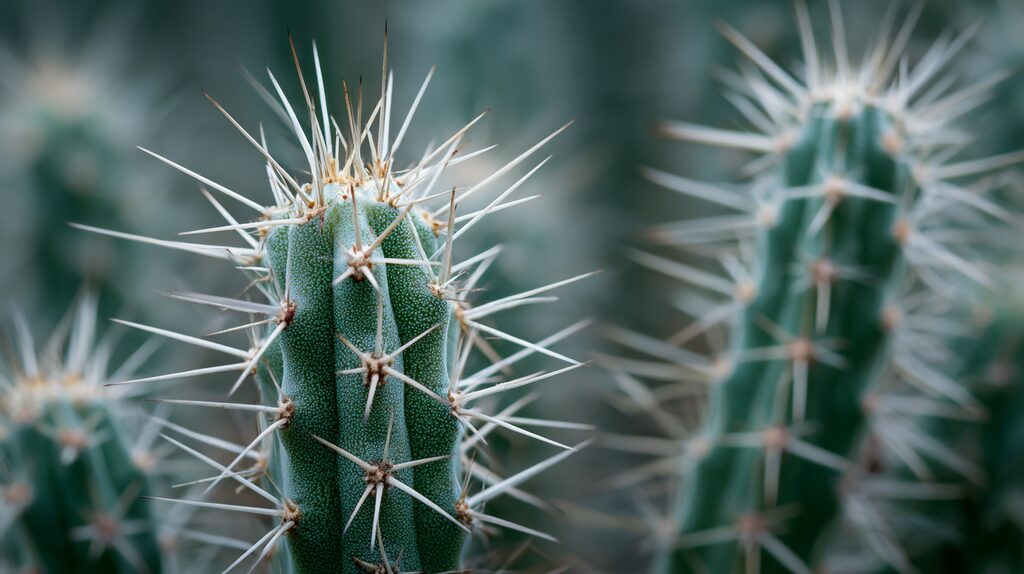
Not all greenery soothes the spirit. Spiky or sharp-leaved plants, such as cacti, carry a strong, protective energy that can feel restless within calm, interior spaces. While they serve well in open, outdoor environments, they’re best avoided in areas intended for rest and connection, such as bedrooms or living rooms. Likewise, wilted or neglected plants hold stagnant energy — tending to them, or letting them go, helps keep your space vibrant and alive.
Where Nature Meets Intention
Incorporating plants into your home is a simple yet profound way to apply Feng Shui principles. It is an act that bridges ancient philosophy with modern science, creating an environment that is not only aesthetically pleasing but also psychologically and energetically supportive. Begin by selecting one or two healthy plants that resonate with you. Care for them, observe their growth, and notice the subtle but significant shifts in your home’s atmosphere. By nurturing these living elements, you are actively participating in the cultivation of a balanced, vibrant, and prosperous space.
At Feng Shui Point, we help homeowners design spaces that breathe with intention — where every element, from layout to leaf, contributes to harmony. Explore more insights or schedule a consultation.